
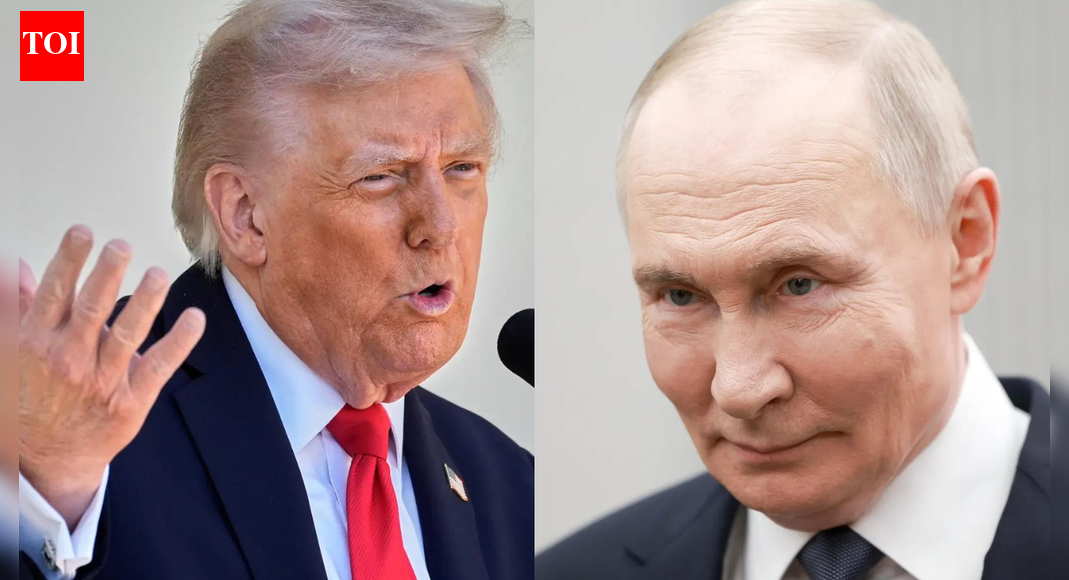
Trump Optimistic on Ukraine Peace After "Very Good" Moscow Talks
US President Donald Trump has expressed optimism regarding a potential resolution to the ongoing Ukraine conflict, indicating that recent discussions between a US delegation and Russian President Vladimir Putin left a strong "impression" that Putin genuinely seeks an end to the war. These "very good" talks in Moscow were centered around Washington's comprehensive peace proposal, according to President Trump.
The extensive five-hour meeting, held the day prior in Moscow, involved US Special Envoy Steve Witkoff and Trump's son-in-law, Jared Kushner, engaging directly with President Putin. This session was dedicated to reviewing the details outlined in four crucial documents previously submitted to the Kremlin concerning the US peace initiative.
Speaking to reporters from the Oval Office, Trump acknowledged the inherent complexities of such high-stakes negotiations, remarking, "It does take two to tango," but firmly reiterated the delegation's clear perception that Putin is indeed inclined towards de-escalating and concluding the conflict.
Kremlin Confirms "Useful Discussion" Amidst Lingering Disagreements
Despite the prolonged nature of the talks, Kremlin aide Yuri Ushakov provided a more nuanced perspective, clarifying that that while both delegations thoroughly reviewed the broad contours of the US proposals, no definitive compromises were reached, nor was an agreement made to convene a new Putin-Trump summit. Ushakov underscored that although potential pathways to a settlement were explored, several significant disagreements continue to persist between the two sides.
"We could agree on some things... Other things provoked criticism," Ushakov stated, adding, "and the president also made no secret of our critical and even negative attitude toward a number of proposals." He concluded that the main takeaway was that a "very useful discussion took place." He further emphasized the confidential nature of the dialogue, noting an agreement not to publicly disclose the substance of the negotiations. Ushakov also mentioned that meaningful progress is yet to be fully achieved, though diplomatic engagement remains ongoing, and Putin utilized Witkoff to convey "a number of important political signals" directly to President Trump.
Unveiling the US Peace Plan and Escalating Diplomatic Momentum
The 28-point US peace proposal, which was initially unveiled last month, drew considerable scrutiny and criticism from Ukraine and various European governments. Their primary concern was that certain provisions appeared to lean too heavily in Moscow's favor. Subsequently, US officials confirmed that specific aspects of the plan had been revised following direct feedback received from Kyiv and other European partners.
President Trump's intensified push for a negotiated settlement in recent weeks is driven by his conviction that Ukraine's challenges on the battlefield combined with the increasing financial and human costs for Moscow could create a crucial window of opportunity for both parties to seriously pursue a deal. American officials, as cited by the New York Times, suggest that the rigorous effort to formalize these proposals and present them to both President Putin and Ukrainian President Volodymyr Zelenskyy has generated more substantial diplomatic activity in the past few weeks than in the entire preceding three years combined.
Reports indicate that these complex negotiations are currently advancing along four distinct parallel tracks. One key track is focused on matters pertaining to Ukraine's sovereignty, encompassing potential limitations on the size of its peacetime army and the operational range of its missiles. The remaining tracks are dedicated to addressing intricate territorial questions, fostering economic cooperation, and tackling broader European security issues.
Tuesday's significant meeting marked the sixth and notably the longest session between Special Envoy Witkoff and President Putin held in Russia this year. The participation of Jared Kushner, widely recognized for his instrumental role in negotiating October's Gaza ceasefire and as a principal architect of the Abraham Accords during Trump's first term, represents a notable development, highlighting the elevated importance and seniority of the US diplomatic engagement.