Trump Hosts Congo, Rwanda Leaders in Washington for Peace Deal & Mining Investment Push Amidst Ongoing Conflict
Dec 4, 2025
 Democratic Republic of the Congo
International Diplomacy
Democratic Republic of the Congo
International Diplomacy
Democratic Republic of the Congo
International Diplomacy
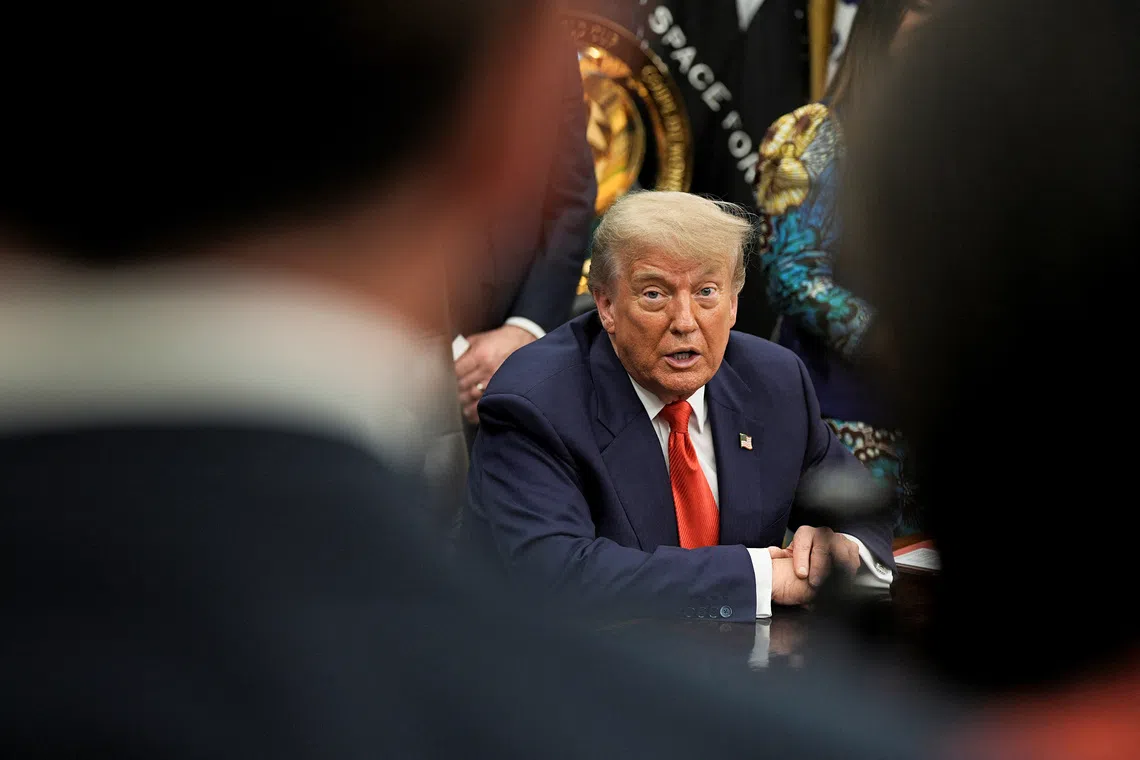
US President Donald Trump hosts leaders from DR Congo and Rwanda in Washington to sign peace and economic deals, aiming to stabilize the region and attract mini
Trump Mediates Congo-Rwanda Peace & Investment Deals in Washington
In a high-stakes diplomatic move, US President Donald Trump convened leaders from the Democratic Republic of Congo (DRC) and Rwanda in Washington on December 4 to forge new agreements. The summit aimed at stabilizing a region long plagued by conflict and unlocking significant Western investment in its rich mineral resources.
Rwandan President Paul Kagame and DRC President Felix Tshisekedi were expected to reaffirm their commitment to an economic integration pact established in November, alongside a US-brokered peace accord from June that has yet to be fully implemented. This meeting is part of a broader push by the Trump administration, which has actively engaged in various global conflicts since January, from the Middle East to Ukraine, with varying degrees of success.
Persistent Instability and Unresolved Issues
Despite the diplomatic efforts, analysts caution that while US intervention has temporarily curbed the escalation of fighting in eastern Congo, it hasn't addressed the root causes of the instability. The M23 rebel group, which a United Nations report linked to Rwandan support, seized major cities in eastern Congo earlier in 2025, sparking fears of a wider regional war. Rwanda consistently denies supporting M23, asserting its forces act in self-defense against Hutu militias tied to the 1994 genocide. M23, conversely, claims to protect ethnic Tutsi communities in eastern Congo.
The humanitarian crisis on the ground remains dire. Just days before the Washington summit, on December 2, Congo’s army and M23 rebels traded accusations of violating ceasefire agreements renewed in November. Congolese official Patrick Muyaya, speaking in Washington on December 3, blamed M23 for recent clashes, stating it proved "Rwanda does not want peace." Notably, M23 was not invited to the Washington meeting and is not bound by any Congo-Rwanda agreement.
Dr. Jason Stearns, an expert from Canada’s Simon Fraser University, highlighted the limited impact of current diplomacy: “The US, in particular, has been successful in at least putting a pin in the conflict so it does not continue to escalate... All they have done, really, is put a pin in it, and the core issues have not been resolved. And it does not look like they are getting much closer to being resolved.”
The Lure of Critical Minerals and Future Challenges
A significant driver behind the US engagement is the immense mineral wealth of the region, which includes tantalum, tin, tungsten, gold, cobalt, copper, and lithium. The Trump administration has explored facilitating billions of dollars in Western investment, strategically aiming to secure access to these critical minerals amidst global competition, particularly with China.
The new agreement outlines reciprocal obligations: Congo is expected to suppress an armed group opposing M23 (the Democratic Forces for the Liberation of Rwanda), while Rwanda is to withdraw its forces from Congo. However, little progress has been observed on these commitments since the initial June agreement. Rwandan Foreign Minister Olivier Nduhungirehe expressed cautious optimism in a December 3 interview with Reuters, stating, “We hope that, after the signing, we will see improvement on the ground.”
This latest chapter in the eastern Congo conflict continues a three-decade-long ethnic rivalry along the border with Rwanda. Two devastating wars in the African Great Lakes region between 1996 and 2003 claimed millions of lives, and the current cycle of fighting has resulted in thousands dead and hundreds of thousands displaced. The Washington meeting, therefore, represents a crucial, yet challenging, step towards lasting peace and stability in a highly volatile and resource-rich part of Africa.
By news
9 months ago
No cameras found for this country.