Putin Questions US Double Standards on India's Russian Oil Imports Amid Historic Delhi Visit
Dec 5, 2025
 India
International Relations
India
International Relations
India
International Relations
Putin questioned US pressure on India over Russian oil imports during his Delhi visit, citing US own purchases of Russian nuclear fuel. India aims to boost trad
Putin Questions US Double Standards on India's Russian Oil Imports Amid Historic Delhi Visit
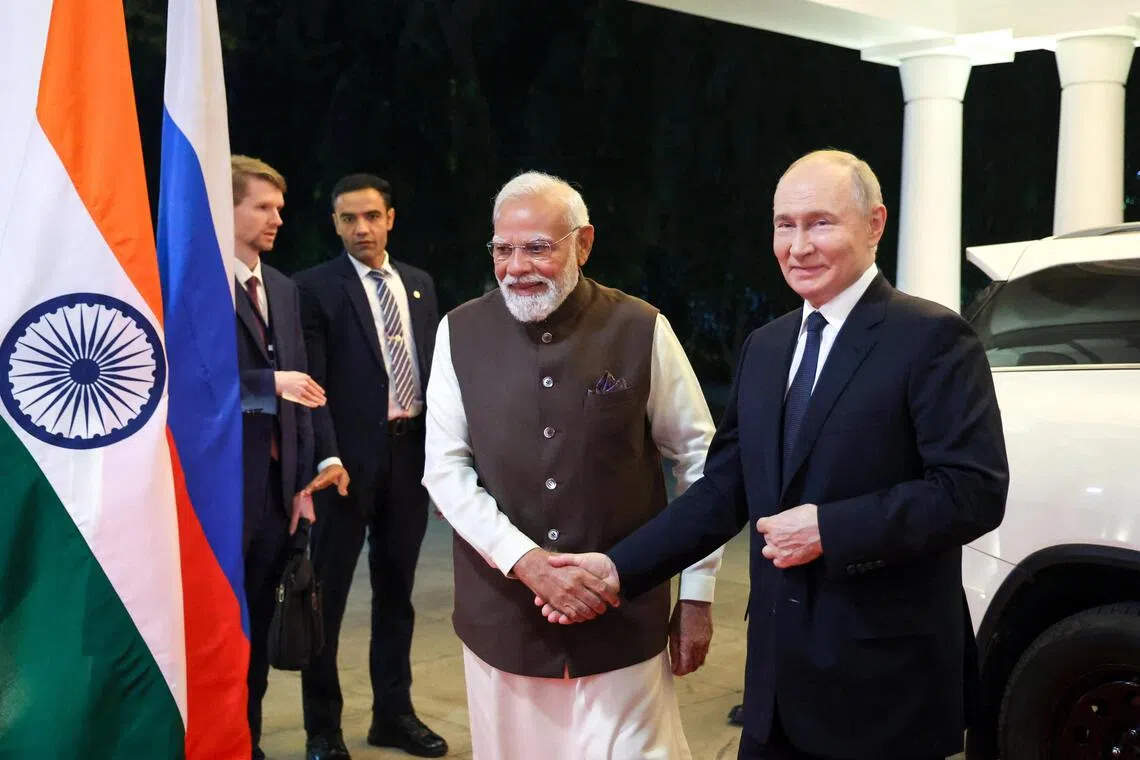
Russian President Vladimir Putin recently ignited a diplomatic discussion during his state visit to India, directly challenging the United States' policy of pressing New Delhi to reduce its purchases of Russian oil. Upon his arrival in New Delhi, Putin was warmly greeted by Indian Prime Minister Narendra Modi, a gesture highlighting the enduring strong ties between the two nations despite ongoing global geopolitical shifts.
A Pivotal Visit Reinforcing Enduring Alliance
Putin's first visit to India in four years sought to deepen economic collaboration, particularly in critical sectors such as oil, defense, and to diversify their overall trade relationship. This high-level diplomatic engagement occurred against a backdrop of considerable US pressure on India to distance itself from Moscow following Russia's actions in Ukraine. Nevertheless, the historical bond between India and Russia, which dates back to the Soviet era, remains a cornerstone of India's foreign policy. Russia has consistently been India's primary supplier of arms for decades, and India has, notably, become a leading buyer of Russian seaborne oil, adapting to Western sanctions.
The Argument of Double Standards
In a candid interview with India Today, President Putin articulated his core criticism: if the United States continues to purchase Russian nuclear fuel for its own power plants, he questioned, why should India face punitive measures for importing Russian oil under similar circumstances? "If the US has the right to buy our fuel, why shouldn’t India have the same privilege?" Putin pressed, stressing the need for a thorough examination of this apparent double standard. His comments directly addressed the Trump administration's imposition of tariffs on Indian goods, citing India's acquisition of inexpensive Russian oil as indirectly financing Russia's war effort. India has consistently argued that these tariffs are unjustified, pointing out that the US and European Union continue substantial energy and commodity imports from Russia.
Navigating Trade Amidst Tariffs
Despite Western pressure, Putin downplayed any significant decline in bilateral trade, characterizing it as a "minor adjustment." He affirmed that the trade in Russian petroleum products and crude oil with India was "running smoothly." Both nations share an ambitious goal, aiming to boost two-way trade to an impressive US$100 billion by 2030. While recent figures showed a slight dip in crude oil imports, total commerce had previously surged dramatically from US$13 billion in 2021 to nearly US$69 billion in 2024–25, primarily driven by energy. To rebalance trade, which is currently heavily skewed towards Russian energy exports, Russia is actively seeking to import more diverse Indian goods. Indian Trade Minister Piyush Goyal outlined plans to expand exports to Russia, including automobiles, electronics, heavy machinery, textiles, and foodstuffs.
A Future of Collaboration Despite Global Challenges
The warm reception extended to Putin by Modi underscores the strategic importance both leaders place on their bilateral relationship. Their private dinner and subsequent summit talks were anticipated to finalize several new deals, further solidifying their partnership. As India seeks new markets for its exports, particularly those affected by US tariffs, and Russia looks for new avenues for its goods and energy, the India-Russia axis appears poised to navigate global complexities with a renewed focus on mutual economic growth and strategic alignment, irrespective of external pressures.
By news
9 months ago
No cameras found for this country.