US Military Pacific Drug Boat Strikes Spark Controversy: Four Killed, Lawmakers Question Rules of Engagement
Dec 5, 2025
 United States
Defense & Politics
United States
Defense & Politics
United States
Defense & Politics
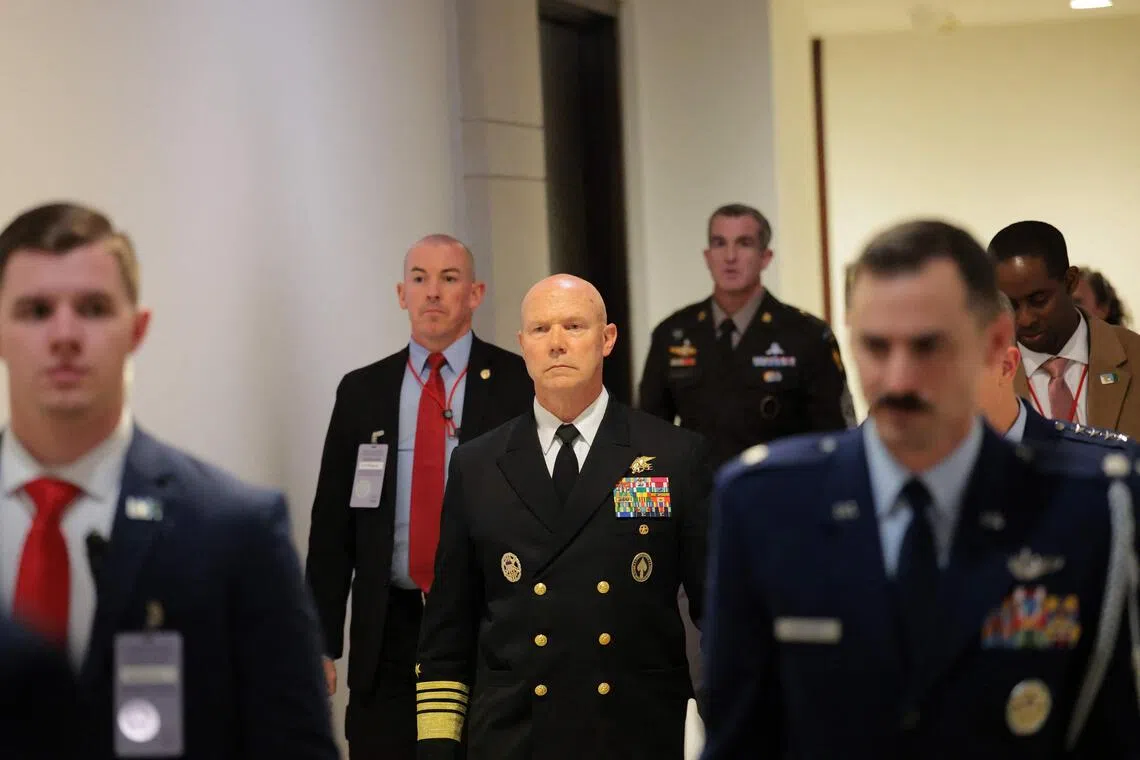
US military strikes on alleged drug boats in the Eastern Pacific killed four, adding to 87 total deaths. Controversy mounts over a September incident where forc
US Military Strikes in Pacific Spark Intense Controversy After Four More Deaths
The United States military has reported another deadly strike in the eastern Pacific Ocean, targeting an alleged drug-trafficking vessel on December 4th. This latest incident, which resulted in the deaths of four individuals, intensifies an already heated controversy surrounding Washington's aggressive campaign against "narco-terrorists," a campaign that has now claimed over 87 lives.
The December 4th strike involved a multi-engine boat in international waters, identified by US Southern Command as being operated by a Designated Terrorist Organization. Intelligence reportedly confirmed the vessel was transporting illicit narcotics along a known trafficking route. A video released by US Southern Command depicted the high-speed boat before a blast engulfed it in flames, stating "Four male narco-terrorists aboard the vessel were killed."
Lawmakers Clash Over Rules of Engagement
This new fatality count comes amidst a growing political firestorm, particularly concerning a prior incident on September 2nd. In that controversial operation, US forces reportedly targeted the wreckage of a previously hit vessel, resulting in the deaths of two survivors. Lawmakers on Capitol Hill received a classified briefing, viewing extended video footage of both the recent and the September incident.
Representative Jim Himes, the leading Democrat on the House Intelligence Committee, expressed profound concern after seeing the footage. He told journalists that the video showed "the United States military attacking shipwrecked sailors – bad guys, bad guys – but attacking shipwrecked sailors." Himes described the scene as "one of the most troubling things I’ve seen in my time in public service," highlighting that two distressed individuals, without means of locomotion from a destroyed vessel, were killed by US forces.
Republican Representative Don Bacon echoed similar concerns on CNN, stating that "these two people were trying to survive and our...rules of war would not allow us to kill survivors." He emphasized that the rules require an imminent threat, which he believed the survivors did not pose.
Conversely, Republican Senator Tom Cotton staunchly defended the military's actions. After attending the briefing, Senator Cotton asserted that "the first strike, the second strike, and the third and the fourth strike on Sept 2 were entirely lawful and needful, and they were exactly what we’d expect our military commanders to do." He viewed the footage as showing "two survivors trying to flip a boat loaded with drugs bound for the United States back over so they could stay in the fight."
Blame Game and Broader Context
The White House and Pentagon have attempted to deflect blame from Defense Secretary Pete Hegseth regarding the decision to strike survivors in September, instead pointing to Admiral Frank Bradley, who directly oversaw the operation. While Representative Himes noted Admiral Bradley informed lawmakers that Hegseth didn't order the full crew's extermination, Representative Bacon maintained that the Secretary of Defense ultimately bears responsibility.
President Donald Trump's administration frames these operations as a crucial component of a war against "narco-terrorists." To bolster this campaign, the president has deployed significant military assets, including the world’s largest aircraft carrier, to the Caribbean for counter-narcotics operations.
However, these aggressive tactics and military build-ups have escalated regional tensions. Venezuela's leftist leader, Nicolas Maduro, has vehemently accused Washington of exploiting drug trafficking as a mere pretext for "imposing regime change" in Caracas, adding another layer of geopolitical complexity to the ongoing controversy.
By news
9 months ago