
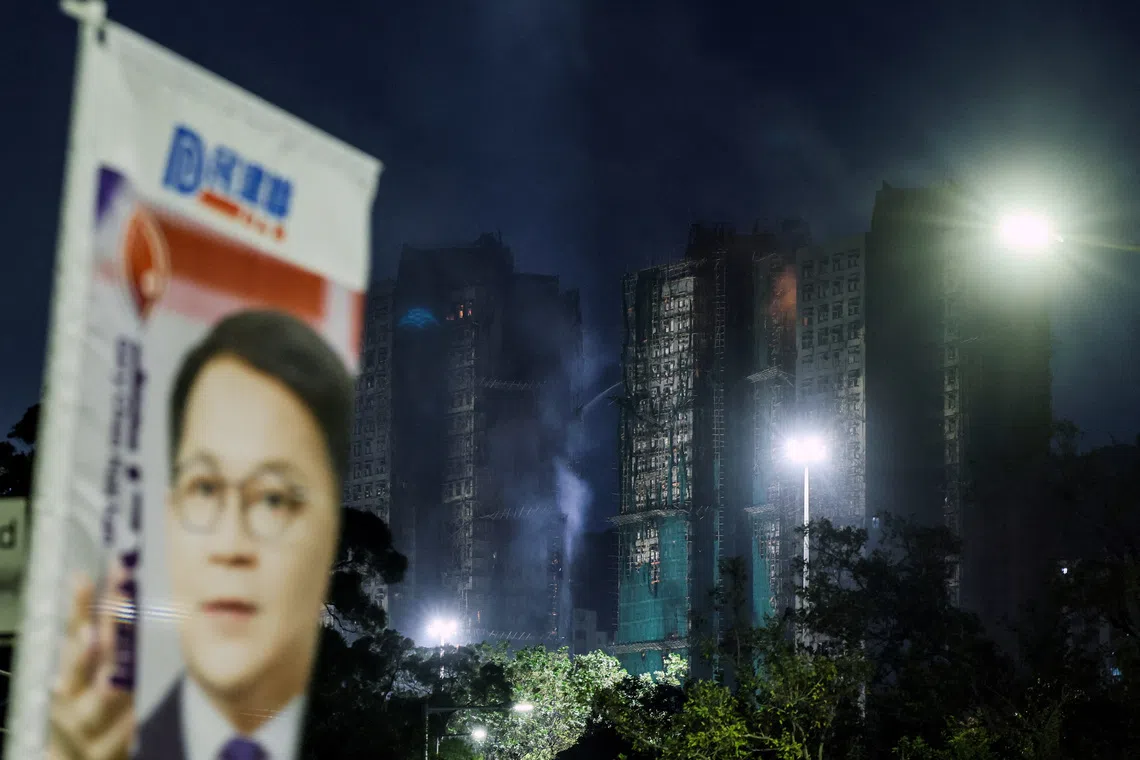
Hong Kong's Legislative Election: Low Turnout Expected Amidst Deadly Fire Aftermath and Political Climate
Hong Kong is gearing up for a legislative election this Sunday, but expectations are notably low for significant voter engagement. The city is currently engulfed in mourning after the tragic loss of 159 lives in its deadliest fire in decades, an event that has cast a profound shadow over the political campaign season. This subdued atmosphere is further complicated by an electoral system now characterized as "patriots only," which strictly limits candidates to those deemed loyal to Beijing.
Public Grief and Anger Over Devastating Blaze
The recent devastating blaze, which occurred just last week, has ignited widespread public anger and trauma across the city. Authorities have publicly acknowledged that substandard building materials used during renovation work at the high-rise estate in northern Tai Po district were directly responsible for exacerbating the fire, intensifying the existing public discontent. For many residents, the timing of an election amidst such profound grief feels deeply inappropriate. May Li, 48, articulated this sentiment, stating, "Everyone's mood is so heavy right now. How can we still talk about holding an election under these circumstances?" An 82-year-old retiree, C.K. Lau, echoed this view, observing a distinct lack of public enthusiasm or "eagerness to elect people."
A Test of Legitimacy Amidst Security Crackdown
This upcoming vote is widely interpreted by political analysts as a critical test of legitimacy for the Hong Kong government. It takes place as authorities simultaneously strive to pacify public anger stemming from the disaster and continue to oversee an ongoing national security crackdown. Campaign activities, which had been briefly suspended out of respect for the fire's victims, have tentatively resumed. Volunteers are distributing flyers and hanging banners, often to largely indifferent residents.
Calls to Vote and Enforcement Measures
Despite the prevailing apathy, authorities are actively encouraging participation. Hong Kong's national security office recently issued an appeal for residents to "actively participate in voting," portraying it as essential for post-disaster reconstruction efforts and a tangible demonstration of "love for Hong Kong." However, in parallel with these calls, the city's anti-corruption body has reported several arrests. Four individuals were apprehended for inciting vote boycotts on Thursday, adding to three others arrested for the same offence on November 20. Publicly inciting a vote boycott was criminalized in 2021.
Electoral Reforms and Declining Democratic Space
The current electoral landscape is a direct consequence of sweeping reforms enacted in 2021, which followed the imposition of Beijing's national security law on the city in 2020. These reforms effectively marginalized pro-democracy voices, ensuring that only "patriots" – candidates explicitly deemed pro-Beijing – could contest the 90-seat legislature. Analysts contend that this has significantly diminished the space for meaningful democratic participation by Hong Kong residents. Historically, pan-democrat voters constituted approximately 60% of Hong Kong's electorate, but they have largely abstained from recent polls in protest.
Historic Low Turnout and Voter Apathy
Consequently, voter turnout figures have shown a consistent and alarming decline. The last Legislative Council elections in 2021 recorded a dismal 30.2% turnout, marking the lowest participation rate since the former British colony's return to Chinese rule in 1997. The number of registered voters for the upcoming Sunday polls has also decreased for the fourth consecutive year, dropping from a peak of 4.47 million in 2021 to 4.13 million currently. While postponing the election could potentially create a legislative vacuum, the prevalent mood suggests that deep-seated voter apathy remains a formidable challenge for the government. National security authorities have also issued warnings against any attempts to "exploit" the fire to incite another "colour revolution," a clear reference to the 2019 pro-democracy protests that shook the city.