
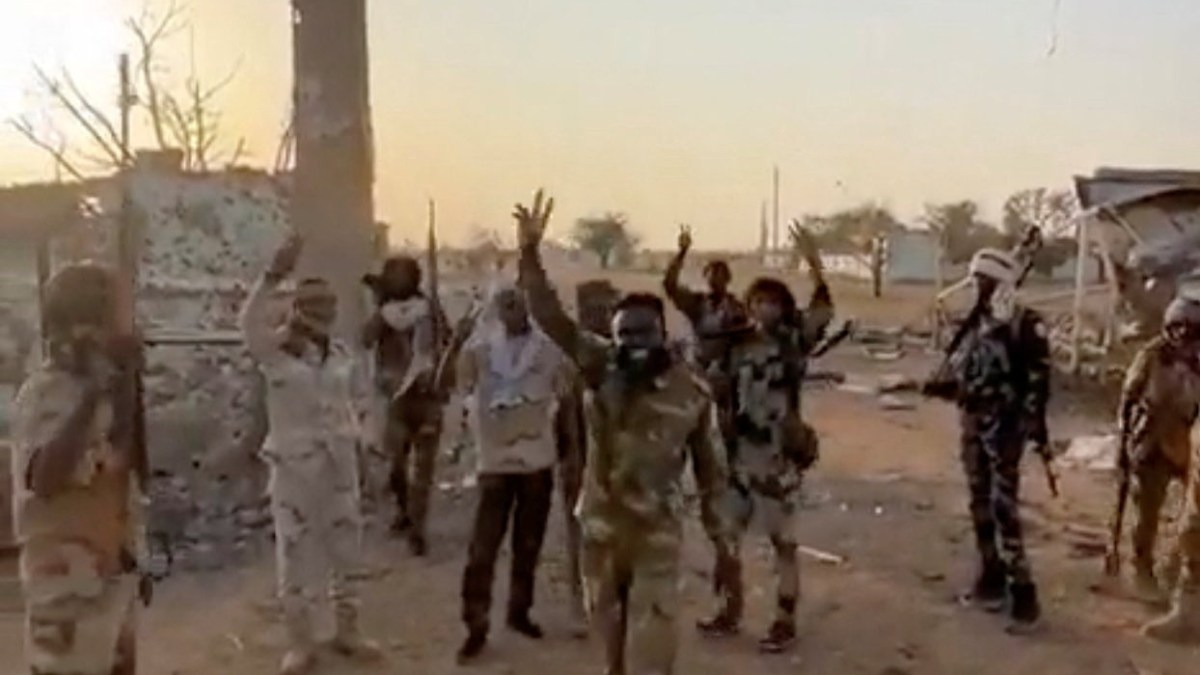
The devastating civil war in Sudan has once again shown its brutal face, with recent reports indicating a horrific toll on civilians, particularly children. Sources within the government-aligned Sudanese Armed Forces (SAF) have informed Al Jazeera that attacks by the paramilitary Rapid Support Forces (RSF) on the city of Kalogi in South Kordofan state have resulted in approximately 47 fatalities, predominantly children, and left around 50 others wounded.
Horrific Attacks on Civilians in Kalogi
The accounts detail a harrowing sequence of events. On a recent Thursday, the RSF reportedly first targeted a kindergarten in Kalogi. Shockingly, they then returned to bomb civilians who had gathered at the scene to offer aid to the victims. The city's hospital and a government building were also subjected to bombardment. The full extent of the tragedy remains unclear, as many of the injured are in critical condition, suggesting the death toll could still rise.
Initial reports from the Sudan Doctors Network corroborated the severity of the situation, documenting at least nine deaths, including four children and two women, from what they described as “deliberate suicide-drone attacks” by the RSF and its ally, the Sudan People’s Liberation Movement–North (al-Hilou). These assaults, targeting civilian facilities and a kindergarten, are unequivocally deemed grave violations of international humanitarian law, marking a continued pattern of attacks on non-combatants and crucial infrastructure.
This latest incident underscores the ongoing brutality of the conflict, now in its third year, between the SAF and the RSF. While the RSF is implicated in this particular atrocity, the SAF has also faced accusations of committing similar acts during the protracted war.
UN Warns of Looming Atrocities in Kordofan
Adding to the growing alarm, the United Nations issued a stark warning on Thursday that Sudan's Kordofan region stands on the precipice of another wave of mass atrocities. UN human rights chief Volker Turk expressed deep concern, stating that “history is repeating itself” in Kordofan, drawing parallels to the recent fall of el-Fasher, the capital of North Darfur state. International warnings regarding impending violence in el-Fasher were largely ignored, leading to widespread killings.
Turk emphasized the shocking nature of these events mirroring so closely after el-Fasher's horrific outcome, urging global powers to intervene and prevent a similar catastrophe in Kordofan. Since late October, following the RSF's capture of Bara in North Kordofan, the UN has already documented at least 269 civilian deaths from aerial bombardments, artillery, and summary executions. The widespread communication blackouts across the region suggest the actual casualty figures are likely far higher, with emerging reports of revenge attacks, arbitrary detentions, sexual violence, and the forced recruitment of children.
Kordofan's Strategic Importance Fuels Conflict
The strategic importance of Kordofan has amplified its role in the conflict. The region acts as a critical corridor between RSF-controlled Darfur to the west and government-held territories to the east and north, linking the heartlands of the warring factions. Control of key cities like el-Obeid would provide the RSF with a direct route to the capital, Khartoum, which government forces recently recaptured.
Calls for Accountability and International Action
The international community's failure to prevent the atrocities in el-Fasher, which UN chief Antonio Guterres described as a “crime scene” visible even through satellite imagery, has heightened calls for accountability. Amnesty International has demanded war crimes investigations, and the European Union has imposed sanctions on Abdelrahim Dagalo, the RSF's deputy and brother of its leader, Mohamed Hamdan “Hemedti” Dagalo. The current situation in Kordofan demands urgent global attention to prevent further loss of innocent lives.