US Military Conducts New Boat Strike, Killing 4, Amid War Crime Probe into Initial Attack | Pacific Drug Campaign Scrutiny
Dec 5, 2025
 United States
Defense & Politics
United States
Defense & Politics
United States
Defense & Politics
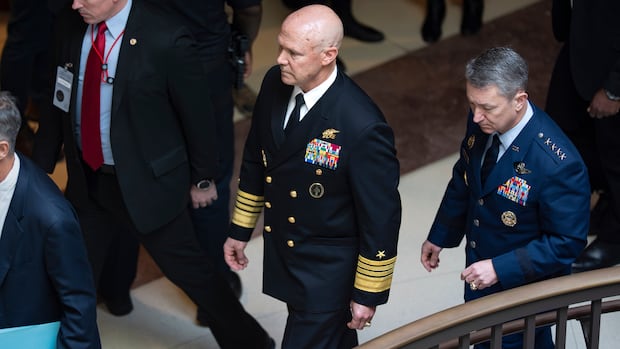
The US military conducted another boat strike in the Eastern Pacific, killing four, as lawmakers probe allegations of war crimes in a prior attack. This adds to
US Military Conducts New Boat Strike, Killing 4, Amid War Crime Probe
The United States military has carried out another strike against a small vessel in the eastern Pacific Ocean, resulting in four fatalities. This incident marks the 22nd such operation in the Caribbean Sea and eastern Pacific, which the Trump administration has linked to combating drug trafficking. The latest strike occurred after a nearly three-week hiatus in these controversial missions, bringing the total death toll from the campaign to at least 87 individuals.
A video released with the announcement depicts a small boat on the water, suddenly engulfed by a massive explosion. The footage then expands, showing the vessel ablaze and emitting thick plumes of smoke.
War Crime Allegations and Congressional Scrutiny
This strike coincided with Admiral Frank "Mitch" Bradley's closed-door briefings at the U.S. Capitol. Lawmakers initiated an investigation into the military's very first strike on September 2, prompted by a report alleging that Bradley ordered an immediate follow-up attack to eliminate survivors. This second attack was reportedly carried out to meet demands from then-Defence Secretary Pete Hegseth.
Admiral Bradley, testifying alongside General Dan Caine, Chairman of the Joint Chiefs of Staff, denied issuing a "kill them all" order from Hegseth. However, a "stark video" presented to lawmakers, showing the full sequence of attacks, raised significant questions among members of Congress. Legal experts have indicated that intentionally killing survivors of a maritime strike could constitute a violation of the laws of military warfare.
The White House previously confirmed authorizing a second airstrike on an alleged Venezuelan drug boat in September but vehemently denied ordering the deaths of everyone on board, which would indeed be considered a war crime.
Lawmakers React to Disturbing Footage
The testimony from Admiral Bradley provided new details at a critical juncture, as Secretary Hegseth's leadership and the broader legal basis for President Donald Trump's unprecedented use of war powers against suspected drug smugglers face intense scrutiny.
Congressional members offered divergent interpretations of the video evidence. Republican Senator Tom Cotton of Arkansas claimed he observed survivors "trying to flip a boat loaded with drugs bound for the United States back over so they could stay in the fight." In stark contrast, Democratic Representative Jim Himes of Connecticut, the ranking member on the House Intelligence Committee, described the footage as "one of the most troubling things I've seen in my time in public service." He recounted seeing "two individuals in clear distress, without any means of locomotion, with a destroyed vessel," asserting they "were killed by the United States." Similarly, Washington Representative Adam Smith, the leading Democrat on the House Armed Services Committee, stated the video showed survivors as "basically two shirtless people clinging to the bow of a capsized and inoperable boat, drifting in the water — until the missiles come and kill them."
This renewed focus by Congress underscores the escalating debate surrounding the Trump administration's aggressive tactics in its anti-drug operations at sea.
By news
9 months ago