FIFA's "Peace Prize" to Trump Sparks Outcry Over Political Neutrality & Human Rights Record Ahead of 2026 World Cup
Dec 6, 2025
 United States
Sports Politics
United States
Sports Politics
United States
Sports Politics
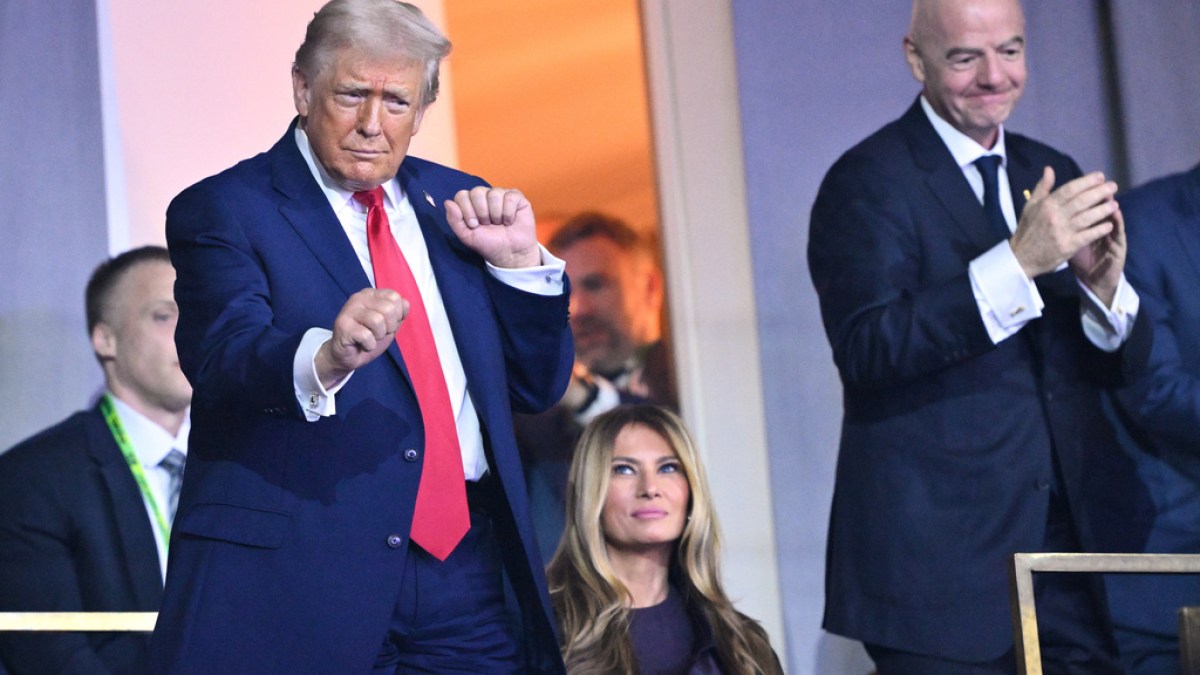
FIFA awarded its inaugural Peace Prize to Donald Trump, igniting controversy over the body's political neutrality and Trump's human rights record. Critics quest
FIFA's Inaugural Peace Prize for Trump Ignites Neutrality Debate
The global football community is grappling with a wave of controversy following FIFA President Gianni Infantino's decision to present the newly created FIFA Peace Prize to former U.S. President Donald Trump. This award, conferred in Washington, D.C., has cast a significant shadow over the international governing body's long-held assertion of political neutrality, especially considering its history of sanctioning players for expressing political views.
The Award Ceremony and Infantino's Praise
On December 5, a ceremony unfolded where Infantino publicly lauded Trump for his international diplomatic achievements. Specifically highlighted were the so-called Abraham Accords, which facilitated diplomatic relations between Israel and several Arab nations, notably without resolving the critical issue of Palestinian statehood. Infantino extolled Trump as a leader dedicated to the well-being of people and the creation of a "safe world," emphatically stating that Trump was unequivocally deserving of this novel peace accolade for his "incredible" contributions.
Trump, who has openly sought the Nobel Peace Prize in the past, accepted the FIFA honor, deeming it one of the "greatest honors" he had received. His acceptance speech included repeated assertions that his presidency had saved millions of lives and brought an end to numerous conflicts, alongside a thinly veiled critique of his successor, Joe Biden, by proclaiming the U.S. to be the "hottest country anywhere in the world."
Widespread Condemnation and Hypocrisy Allegations
The timing and selection of the award recipient have drawn extensive criticism. Detractors quickly pointed out that the prize was presented merely hours after the Trump administration reportedly carried out another deadly airstrike in the Caribbean. Craig Mokhiber, a former United Nations official and prominent advocate for suspending Israel from world football over its actions in Gaza, decried the award as a "truly shameful development." Mokhiber explicitly accused Infantino of fabricating the prize to "curry favor" with Trump and to "obscure" his contentious record, which encompasses unwavering support for Israel, Caribbean airstrikes, and alleged human rights violations within the U.S.
FIFA's Inconsistent Stance on Politics
Concerns have escalated regarding FIFA's apparent double standards. While the organization regularly imposes fines and bans on players for displaying political messages, Infantino has reportedly refused to take any punitive action against Israel, justifying this by stating that football cannot resolve "geopolitical issues." This position stands in stark contrast to the swift establishment of a "peace prize" for a figure whose administration has been criticized for escalating military expenditures, authorizing bombings of Iran's nuclear facilities, continuing to arm Israel despite documented abuses, and conducting lethal airstrikes in the Western Hemisphere against suspected drug-carrying vessels—actions that many legal experts have characterized as unlawful extrajudicial killings.
Moreover, Human Rights Watch cited Trump's domestic policies, including heightened anti-immigration crackdowns leading to detentions and attempted deportations of non-citizens, and the targeting of free speech advocates critical of Israel. The organization unequivocally stated that Trump's "appalling human rights record certainly does not display 'exceptional actions for peace and unity.'" Football journalist Zach Lowy offered a sharp, sarcastic comparison, likening the award to Trump to giving Luis Suarez a prize for refraining from biting opponents, highlighting the perceived absurdity. The Democratic Party also joined the chorus of critics, suggesting on social media that FIFA had manufactured the award simply because Trump had failed to secure a Nobel Peace Prize.
Infantino's Ties to Trump Amidst World Cup Preparations
Infantino's seemingly robust relationship with Trump comes at a crucial juncture, as the U.S. prepares to co-host the 2026 World Cup alongside Mexico and Canada. The FIFA president has been a frequent guest at the White House and notably attended a ceremony with Trump to finalize a Gaza truce in Egypt. Critics argue that Infantino's recent actions directly contradict his previous public statements advocating for the "political neutrality of sport" and its inherent capacity to unite people, leading FIFA, as Mokhiber ominatively stated, onto a "bloody pitch." FIFA did not respond to Al Jazeera's request for comment regarding the controversy.
By news
9 months ago