Chornobyl Plant's Protective Shield Damaged by Drone Strike: UN Agency Confirms Safety Function Loss in Ukraine
Dec 6, 2025
 Ukraine
Nuclear Safety
Ukraine
Nuclear Safety
Ukraine
Nuclear Safety
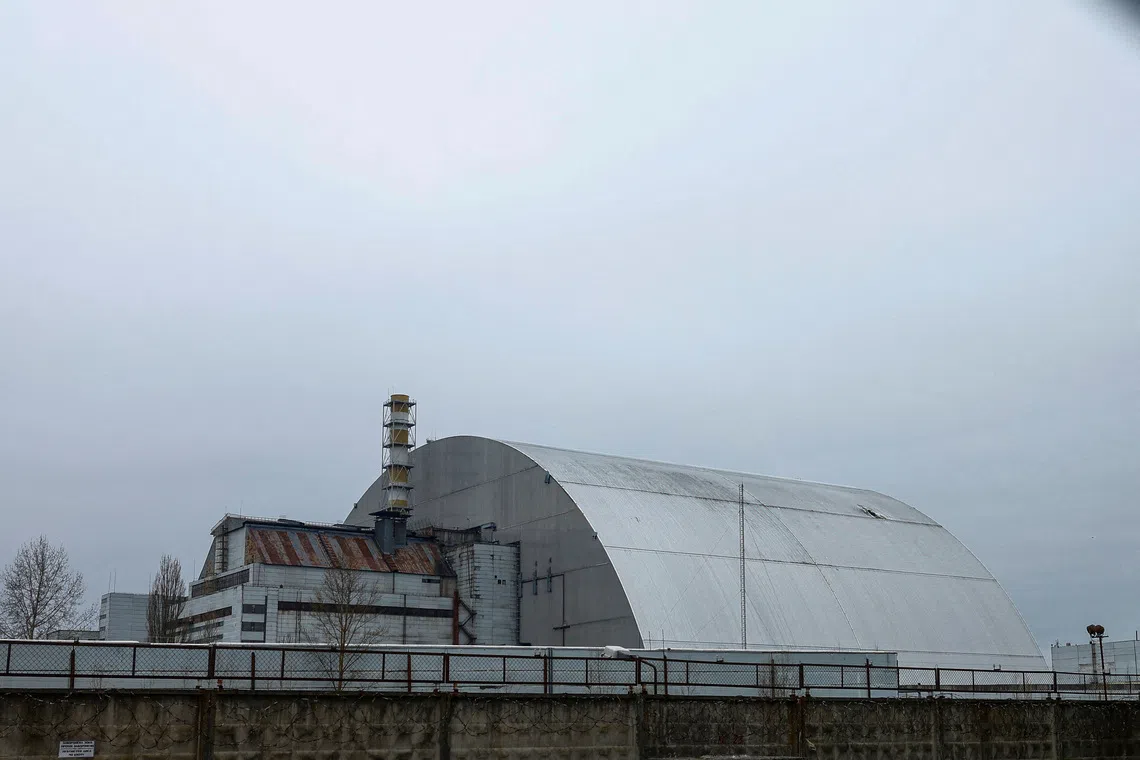
The Chornobyl nuclear plant's protective shield, designed to contain radioactive material, has lost its primary safety function due to drone damage, a UN agency
Chornobyl Protective Shield Damaged by Drone Strike, UN Agency Confirms Safety Loss
The protective shield enveloping the damaged fourth reactor at Ukraine's Chornobyl nuclear plant, a crucial structure built to contain the fallout from the 1986 disaster, has reportedly lost its primary safety function due to damage sustained from a drone strike. This alarming development was confirmed by the International Atomic Energy Agency (IAEA), the UN's nuclear watchdog, following an inspection last week.
IAEA Confirms Degradation and Repair Needs
According to the IAEA, the steel confinement structure, known as the New Safe Confinement (NSC) and completed in 2019, suffered degradation from a drone impact in February. While IAEA Director General Rafael Grossi noted that the structure's primary safety functions, particularly its confinement capability, had been compromised, he also stated that there was no permanent damage to its load-bearing components or monitoring systems. Although some repairs have already been conducted, Grossi emphasized the critical need for "comprehensive restoration" to avert further deterioration and ensure long-term nuclear safety at the site.
Ukraine Blames Russia Amid Denials
Ukrainian authorities reported back on February 14 that a drone, equipped with a high-explosive warhead, struck the plant, initiating a fire and damaging the protective cladding around Reactor Number Four. Ukraine has unequivocally attributed this attack to Russia, an accusation that Moscow has consistently denied. Despite the structural compromise, the UN confirmed in February that radiation levels at the plant remained normal and stable, with no reports of radiation leaks.
Historical Context and Ongoing Conflict
The Chornobyl site carries significant historical weight, having been the scene of the world's worst nuclear accident in 1986, an event that released radiation across Europe. The plant's last operational reactor ceased activity in 2000. More recently, the plant and its surrounding exclusion zone were occupied by Russian forces for over a month during the initial stages of their full-scale invasion of Ukraine in February 2022, as they attempted to advance towards Kyiv. The recent IAEA inspection coincided with a broader survey assessing damage to Ukraine's electricity substations, a consequence of the ongoing nearly four-year conflict between Ukraine and Russia.
By news
9 months ago
No cameras found for this country.