US Supreme Court to Review Trump's Birthright Citizenship Order: A Landmark 14th Amendment Challenge
Dec 6, 2025
 United States
Legal
United States
Legal
United States
Legal
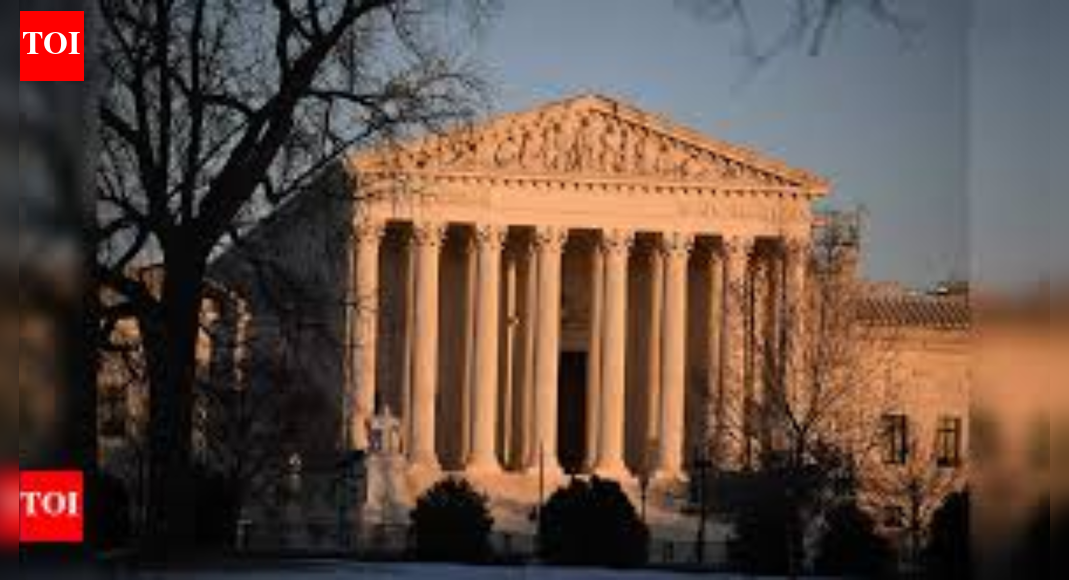
The US Supreme Court will examine President Trump's executive order restricting birthright citizenship. This landmark case challenges the 14th Amendment's inter
US Supreme Court to Review Trump's Birthright Citizenship Order
The United States Supreme Court has agreed to hear the White House's appeal concerning President Trump’s January 20 executive order, which aims to limit birthright citizenship. This significant development sets the stage for a major legal battle over the interpretation of the 14th Amendment.
Understanding the Executive Order's Provisions
The directive seeks to deny automatic U.S. citizenship to children born on American soil under specific circumstances. These include cases where the mother holds a temporary legal status (like an H-4 visa) or no legal status at all, and the father is neither a U.S. citizen nor a permanent resident. Essentially, the order challenges the long-standing understanding that anyone born within U.S. borders is automatically a citizen.
Current Legal Status and Administration's Goal
For the time being, the U.S. government is prohibited from enforcing this order due to four separate injunctions issued by lower courts. By escalating the matter to the Supreme Court, the Trump administration hopes to secure a ruling that validates its reinterpretation of the 14th Amendment's citizenship clause. Such a decision would pave the way for the executive order to finally take effect. Oral arguments are anticipated in 2026, with a final ruling expected around mid-2026.
Immigrant Rights Groups React Strongly
The news has sparked strong condemnation from immigrant-rights organizations, which assert that the Constitution's stance on citizenship is unequivocal. Todd Schulte, president of FWD.us, a bipartisan political organization, emphasized that the Trump administration's "unlawful, and unconstitutional efforts" have consistently been blocked by the judiciary. Schulte urged the Supreme Court to uphold the clear constitutional guarantee: "those born in the United States are citizens, and no president can overturn the constitution by executive order."
The Core of the Legal Challenge: "Subject to the Jurisdiction Thereof"
At the heart of this litigation is the Trump administration's sweeping reinterpretation of the phrase "subject to the jurisdiction thereof" within the 14th Amendment. This move seeks to overturn over a century of established legal precedent. Previous reports had detailed how, if enacted, the order would prevent automatic citizenship for babies born after February 19, 2025, if neither biological parent possesses U.S. citizenship or a green card.
Potential Impact on Immigrant Families
Immigration attorneys highlight that this policy would disproportionately affect families caught in the extensive employment-based green card backlog, a demographic that includes many individuals from India. For instance, a child born to an H-1B worker and an H-4 dependent spouse would, under this order, inherit only the mother's temporary status, rather than gaining U.S. citizenship. In more severe scenarios, if the mother lacked legal status, the newborn would immediately be considered unlawfully present, making them vulnerable to deportation under immigration laws.
While a recent Supreme Court ruling on June 27 narrowed the authority of lower courts to issue universal injunctions, the existing injunctions continue to protect affected families until a definitive final order is delivered by the highest court.
By news
9 months ago