Trump's National Security Strategy Shifts Tone on China: Analyzing US Policy Language Softening
Dec 7, 2025
 United States
Geopolitics
United States
Geopolitics
United States
Geopolitics
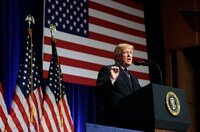
Trump's National Security Strategy reportedly softens its stance on China, signaling a potential shift in US foreign policy. This analysis explores the implicat
Trump's National Security Strategy: A Shift in Language Towards China
Despite the often confrontational rhetoric characterizing the Trump administration's approach to Beijing, reports from The Wall Street Journal suggest a notable shift in the language used within the official National Security Strategy concerning China. This purported softening of stance marks a potential departure from the overtly adversarial tone previously observed, signaling a more nuanced or perhaps pragmatic approach to US-China relations.
Context: Trump's Previous Stance on China
Historically, the Trump administration has frequently framed China as a primary strategic competitor, consistently highlighting concerns over trade imbalances, intellectual property theft, cyber espionage, and military expansion in the South China Sea. Public discourse from top officials often emphasized a need for aggressive countermeasures to protect American interests and global order.
Interpreting the Linguistic Shift
However, a "softening of language" in a document as critical as the National Security Strategy could indicate several possibilities. It might reflect an internal recognition of China’s indispensable role in global affairs, necessitating cooperation on issues like nuclear non-proliferation or global health crises. Alternatively, it could be a strategic maneuver to de-escalate tensions, open new avenues for dialogue, or present a less confrontational image on the international stage while still maintaining pressure through other means.
Potential Implications for Global Relations
Such a pivot could have significant implications. For American businesses, it might signal a slightly less volatile trade environment, while for US allies, it could suggest a more coordinated approach to multilateral engagement with China. Critics might view it as a weakening of resolve against China’s assertive actions, whereas proponents might argue it represents a more realistic and sustainable long-term strategy.
Conclusion: A Nuanced Strategic Calculus?
Ultimately, the precise nature and extent of this linguistic shift, as well as its practical impact on policy, will be crucial to observe. It suggests that behind the strong public statements, there may be a more complex and evolving strategic calculus guiding the US approach to its most significant geopolitical rival. This move signals a potential moment of recalibration in a relationship that defines much of the 21st century's international landscape.
By news
6 months ago