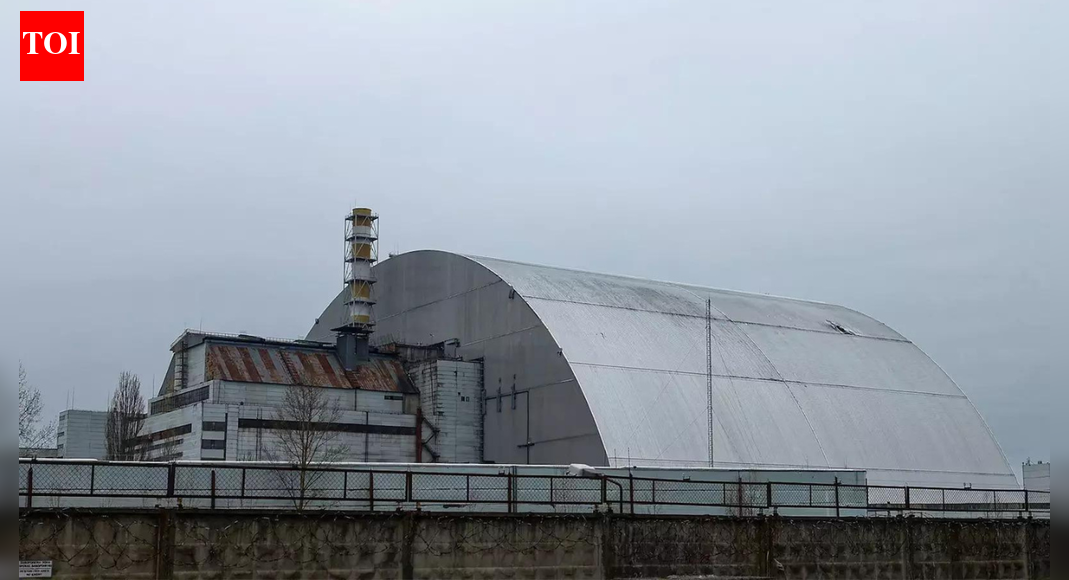
The international atomic energy agency (IAEA) has said the protective structure built to contain radioactive waste at the Chernobyl nuclear disaster site can no longer fully perform its safety functions after being damaged in a drone strike earlier this year.
The new safe confinement (NSC) - the giant steel arch installed to cover the destroyed No 4 reactor - was “severely damaged” during a February 14 strike that sparked a fire and tore through protective cladding, the agency said in a statement on Friday. The IAEA noted the structure has “lost its primary safety functions, including the confinement capability.”
Ukraine has accused Russia of carrying out the attack, an allegation the Kremlin has denied.
IAEA director general Rafael Mariano Grossi said only “limited temporary repairs” have been made so far. “Timely and comprehensive restoration remains essential to prevent further degradation and ensure long-term nuclear safety,” he added, noting there was no permanent damage to the NSC’s load-bearing structures or monitoring systems. The agency said it would continue supporting Ukraine in efforts to restore full safety at the site.
Chernobyl has repeatedly drawn international attention during the nearly four-year war, notably when Russian forces seized and occupied the plant area in early 2022 before withdrawing weeks later.
The NSC, completed in 2019, is the world’s largest movable land structure and was designed to last 100 years, enabling long-term cleanup of the world’s worst nuclear accident. Built at a cost of €2.1 billion, it was funded by more than 45 donor nations through the Chernobyl Shelter Fund, which the European bank for reconstruction and development described as “the largest international collaboration ever in the field of nuclear safety.”
The original 1986 explosion at Chernobyl spread radioactive contamination across large parts of Ukraine, Belarus and Russia. More than 30 people were killed immediately, according to the IAEA and the world health organization, with elevated rates of cancer and birth defects persisting in exposed regions.