US Sanctions Network Funneling Colombian Mercenaries to Sudan's RSF Over War Crimes & Child Soldier Training
Dec 11, 2025
 Sudan
International Security
Sudan
International Security
Sudan
International Security
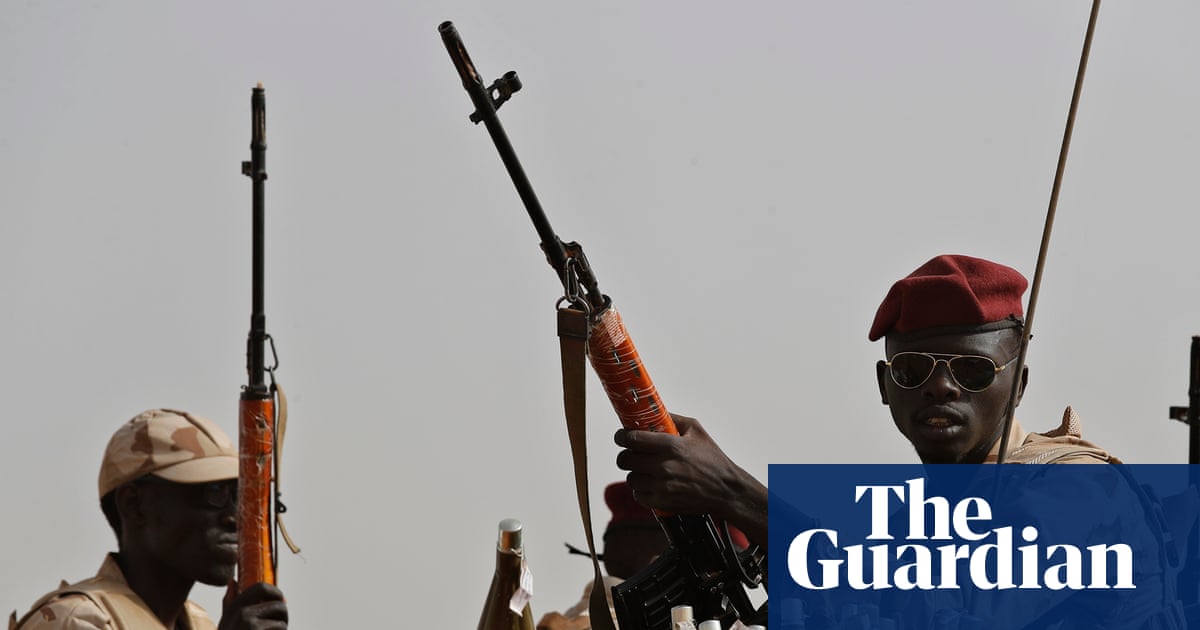
The US Treasury sanctioned four individuals and four companies for recruiting Colombian mercenaries to fight for Sudan's Rapid Support Forces (RSF), accused of
US Sanctions Network Funneling Colombian Mercenaries to Sudan's RSF
The United States has escalated its efforts to disrupt the flow of foreign fighters into Sudan, imposing sanctions on a network accused of recruiting Colombian mercenaries for the Rapid Support Forces (RSF).
The US Treasury announced on Tuesday that four individuals and four companies have been targeted, citing their involvement in enlisting and deploying former Colombian military personnel to support the RSF, a paramilitary group Washington accuses of committing heinous war crimes, including genocide.
Colombian Mercenaries' Role in Sudan Conflict
Hundreds of former Colombian soldiers, known for their extensive battlefield experience gleaned from decades of civil war, knowledge of NATO equipment, and high-level combat training, have reportedly traveled to Sudan. Their involvement with the RSF, which is implicated in ethnically targeted slaughter and widespread abductions, first came to light last year through an investigation by the Bogotá-based outlet La Silla Vacía.
This report, revealing over 300 ex-soldiers had been contracted, even prompted an unprecedented apology from Colombia's foreign ministry.
The mercenaries' alleged activities in Sudan are deeply disturbing. Reports indicate they have trained child soldiers, instructed fighters in drone piloting, and directly participated in frontline combat. One mercenary recounted to The Guardian and La Silla Vacía in October that he trained children in Sudan and fought in the siege of El Fasher, describing the child training as "awful and crazy" but a grim reality of war.
Key Figures Targeted by US Sanctions
Among those sanctioned is Álvaro Andrés Quijano Becerra, a Colombian-Italian national and retired Colombian military officer residing in the United Arab Emirates. The Treasury identifies him as a key figure in the recruitment and deployment of Colombian ex-soldiers to Sudan. His wife, Claudia Viviana Oliveros Forero, was also placed on the sanctions list.
Mateo Andrés Duque Botero, a Colombian-Spanish citizen, was sanctioned for allegedly managing a business that handled funds and payroll for the mercenary network. The Treasury noted millions of US dollars in wire transfers from US-based firms associated with Duque in 2024 and 2025. Mónica Muñoz Ucros, another Colombian national, was also sanctioned, with her company accused of facilitating wire transfers linked to Duque's operations.
Reactions and Future Outlook
The US Treasury reiterated its call for "external actors to cease providing financial and military support to the belligerents" in Sudan. Elizabeth Dickinson, a senior analyst at the International Crisis Group, lauded the sanctions as a "very significant" step, emphasizing the importance of targeting contractors.
She also highlighted Colombia's recent ratification of the International Convention Against the Recruitment and Use of Mercenaries, a move aimed at curtailing its citizens' long history of involvement in foreign conflicts.
However, Sean McFate, an expert on mercenaries, cautioned that while sanctions are necessary, they might be "insufficient for dealing with rampant mercenarism." He pointed out that this illicit economy often operates out of places like Dubai, which can be "relatively sanction-proof." The UAE has faced accusations of arming the RSF, which it denies. McFate grimly predicted, "Expect more Colombian mercenaries."
By news
1 day ago
No cameras found for this country.