Uranus & Neptune's Hidden Secrets: Scientists Uncover Major Discovery Beneath Icy Blue Surfaces
Dec 11, 2025
 Switzerland
Space & Astronomy
Switzerland
Space & Astronomy
Switzerland
Space & Astronomy
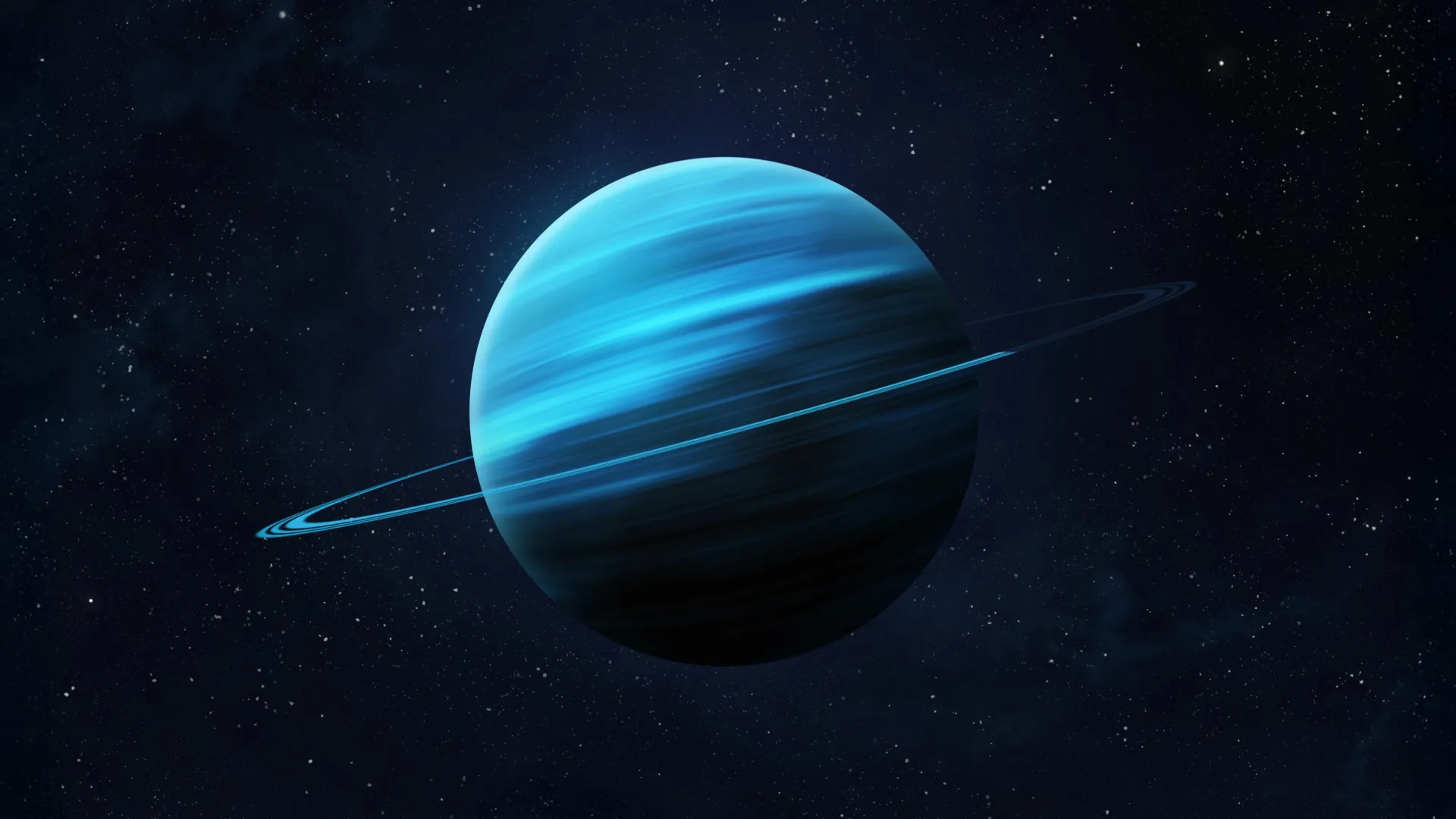
Scientists from the University of Zurich suggest Uranus and Neptune harbor significant, undisclosed features beneath their icy blue atmospheres, hinting at new
Uranus & Neptune's Hidden Secrets: A Glimpse Beneath the Blue
A scientific revelation emerging from the University of Zurich suggests that the enigmatic ice giants, Uranus and Neptune, may be harboring significant, as-yet-undisclosed features deep beneath their iconic azure surfaces.
Unveiling Distant Worlds
For generations, Uranus and Neptune have held a position of intrigue and mystery within our solar system. Positioned far from the sun, these distant worlds, often referred to as 'ice giants,' are characterized by their frigid temperatures, dynamic atmospheric systems, and their captivating blue-green hues, a result of methane absorption in their atmospheres. Compared to the terrestrial planets and even the gas giants Jupiter and Saturn, their true compositions and internal dynamics remain largely unexplored frontiers of planetary science.
What Lies Beneath the Icy Veil?
The announcement, initially circulated via ScienceDaily, hints at a major discovery or a crucial characteristic residing within these planets' complex structures. While the exact nature of this 'something big' is not yet detailed, the implication is profound. Scientific models and observational data might be pointing towards a unique internal layering, an unexpected compositional anomaly, or even previously unknown energetic processes occurring deep within their cores. Current theories suggest their interiors are composed of a dense, fluid mixture of water, ammonia, and methane 'ices,' existing under extreme pressures and temperatures, far beyond anything found on Earth.
Igniting Future Exploration
The involvement of the University of Zurich emphasizes the ongoing commitment of the global scientific community to decode the riddles of our outer solar system. Such a finding, even in its preliminary stages, serves as a powerful catalyst for renewed scientific inquiry, potentially inspiring advanced theoretical work and future space missions dedicated to probing the depths of these remote celestial bodies. This continuing exploration promises to enrich our understanding of how planets form and evolve in the cold, distant realms of space.
By news
1 day ago