Storm Byron Devastates Gaza: Floods, Displaced Families Face Humanitarian Catastrophe Amid Aid Restrictions and UN Warnings
Dec 11, 2025
 Palestinian Territory Occupied
Humanitarian Crisis
Palestinian Territory Occupied
Humanitarian Crisis
Palestinian Territory Occupied
Humanitarian Crisis
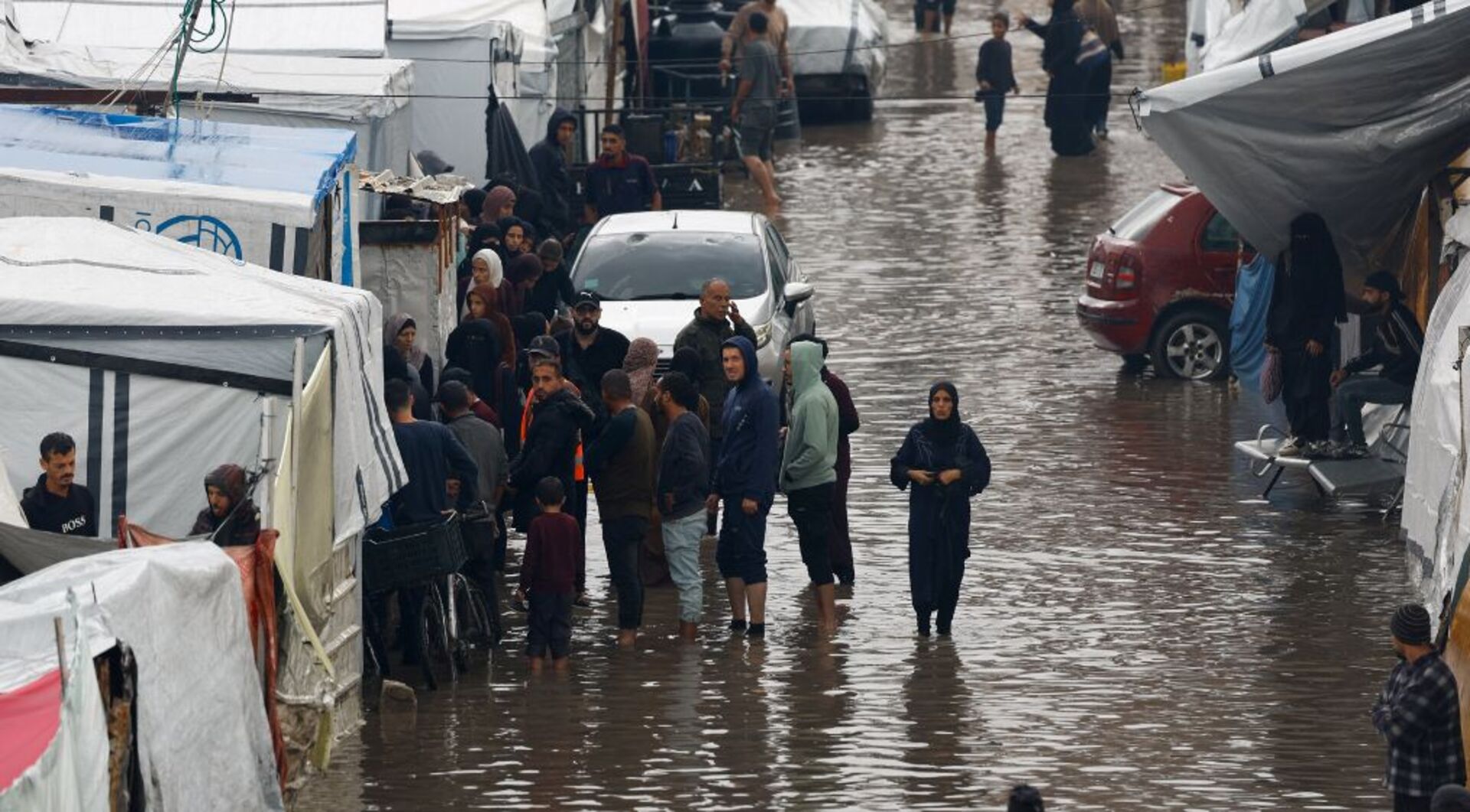
Storm Byron unleashes heavy rains and floods across Gaza, leaving hundreds of thousands of displaced Palestinians in submerged tents. Aid restrictions worsen a
Storm Byron Batters Gaza: A Deepening Humanitarian Catastrophe for Displaced Palestinians
Date: 10 Dec 2025
A severe winter storm, named Byron, is unleashing torrents of rain and powerful winds across the besieged Gaza Strip, pushing an already dire humanitarian situation to its breaking point. Hundreds of thousands of Palestinians, many living in flimsy tents after being displaced by conflict, are facing widespread flooding, forcing families to flee their submerged shelters in a desperate search for dry ground.
Immediate Impact: Floods and Displacement
Reports from areas like the southern city of Rafah paint a grim picture, with the Palestinian Civil Defence receiving urgent distress calls from displacement camps. Families are reporting flooded tents and families trapped inside by heavy rains
. Despite severely limited resources and equipment, rescue teams are working tirelessly to assist those in critical need. Social media footage, verified by Al Jazeera, shows desperate residents digging ditches around their makeshift homes in a futile attempt to divert the rising waters.
The UN Office for the Coordination of Humanitarian Affairs (OCHA) estimates that nearly 850,000 people across 761 displacement sites are at extreme risk of flooding. This isn't a new threat; over 200 of these high-risk sites have experienced flooding before, impacting more than 140,000 individuals. Previous storms have left these sites contaminated with sewage and waste, destroying shelters and forcing families into further displacement.
The Underlying Crisis: Aid Restrictions and Vulnerability
Al Jazeera’s Tareq Abu Azzoum, reporting from Gaza City, highlighted that UN agencies and local authorities are gravely concerned about the devastating consequences of significant rainfall. Displacement camps are often situated on barren, open terrain, making them highly susceptible to flooding. The tents available offer negligible protection, are frequently torn, and provide little safeguard against the heavy rains, threatening the few possessions families have managed to retain.
Amjad Shawa, director of the Palestinian NGOs network, emphasized that Israeli restrictions on aid and essential equipment have left Gaza tragically unprepared. He noted that only 40,000 tents have been allowed into the territory, far short of the estimated 300,000 needed. Crucial tools for repairing water and sewage systems are also restricted. Flooding significantly escalates the risk of drinking water contamination and the spread of diseases in the densely populated Strip, where 2.2 million people are confined to just 43% of the territory.
If Israel were to allow the entrance of supplies, things would be different. But for now, it has done all it can to make life more complicated for Palestinians,
Shawa stated.
International Calls for Intervention
Chris McIntosh, Oxfam's humanitarian response adviser, echoed these concerns, describing the situation as very tragic
. He pointed out that persistent bureaucracy
has prevented adequate dwellings from entering Gaza, with Israel not permitting tents for many months, only allowing some tarpaulin which is insufficient for proper shelter. He estimates that over 50% of Gaza's population now lives in deplorable tent conditions, with many likely to seek refuge in bombed-out buildings, which themselves pose a collapse risk amid the storm.
Farhan Haq, spokesperson for UN Secretary-General Antonio Guterres, warned that vulnerable populations, especially newborn children, are particularly endangered. Approximately 200 families are relocating to a new displacement site in eastern Khan Younis to escape increased flooding risks.
Ismail al-Thawabta, director of Gaza’s Government Media Office, issued an urgent appeal to the international community, including US President Trump and the UN Security Council, to pressure Israel to allow vital supplies into the enclave. He reported that around 288,000 Palestinian families are currently without proper shelter.
Francesca Albanese, the UN special rapporteur on human rights in the occupied Palestinian territory, condemned the global inaction, stating on X, Palestinians in Gaza are literally left alone, freezing and starving in the winter storm. I keep asking how we became such monsters, [i]ncapable of stopping this nightmare.
By news
1 day ago