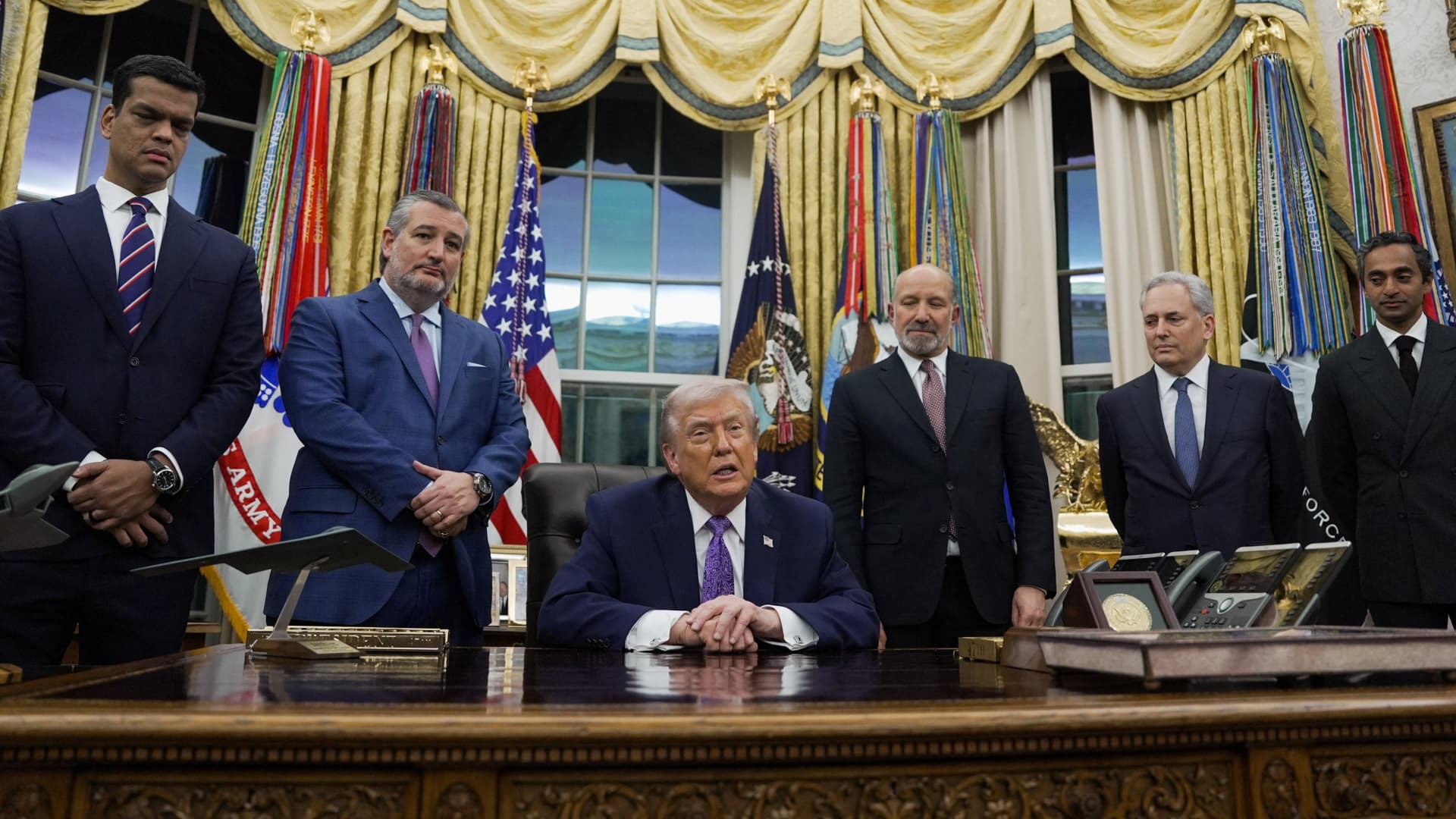
In a significant move impacting the future of artificial intelligence development in the United States, President Donald Trump signed an executive order on December 11, 2025, establishing a singular national regulatory standard for AI. This landmark decision, made in the Oval Office at the White House, aims to streamline oversight and, crucially, curtail the ability of individual states to impose their own diverse regulations on the rapidly expanding AI industry.
The signing ceremony saw President Trump joined by key figures, including David Sacks, the White House's AI and crypto czar, and prominent tech investor and podcaster Chamath Palihapitiya. Also present were Senator Ted Cruz (R-TX) and Commerce Secretary Howard Lutnick, underscoring the bipartisan and industry interest in this policy shift.
A Win for Tech Innovation Advocates
This executive order represents a considerable victory for major technology companies, such as OpenAI and Google, and venture capital firms like Andreessen Horowitz, which have actively lobbied for a unified federal approach. Their argument centers on the belief that a patchwork of 50 different state-level regulations would create an overly burdensome environment, stifling innovation and hindering the competitiveness of U.S. AI firms on the global stage.
The administration's stance, as articulated in the order, is clear: "To win, United States AI companies must be free to innovate without cumbersome regulation." It explicitly states that "excessive State regulation thwarts this imperative," signaling a direct challenge to states like California and New York, which are known for their proactive regulatory efforts and often lean towards stricter oversight. The intent is to preempt state rules, ensuring federal guidelines take precedence.
Lobbying Efforts and Future Implications
The push for a federal standard hasn't happened in a vacuum. AI companies have been increasingly active in Washington D.C., opening offices near the Capitol and engaging in substantial lobbying. A super PAC, backed by these industry players, has reportedly earmarked over $100 million to influence the 2026 midterm elections, highlighting the significant financial and political investment in shaping AI policy.
The White House had hinted at this direction, with a draft of the proposed executive order circulating last month. Its stated goal was to replace a "patchwork of 50 State Regulatory Regimes" with a single, cohesive federal standard. Proponents argue that this consolidation is essential for the U.S. to maintain its lead in the global AI race, fostering an environment where innovation can thrive unencumbered by disparate state-level legal frameworks.
As this is a developing story, further details on the implementation and potential challenges to this executive order are anticipated.