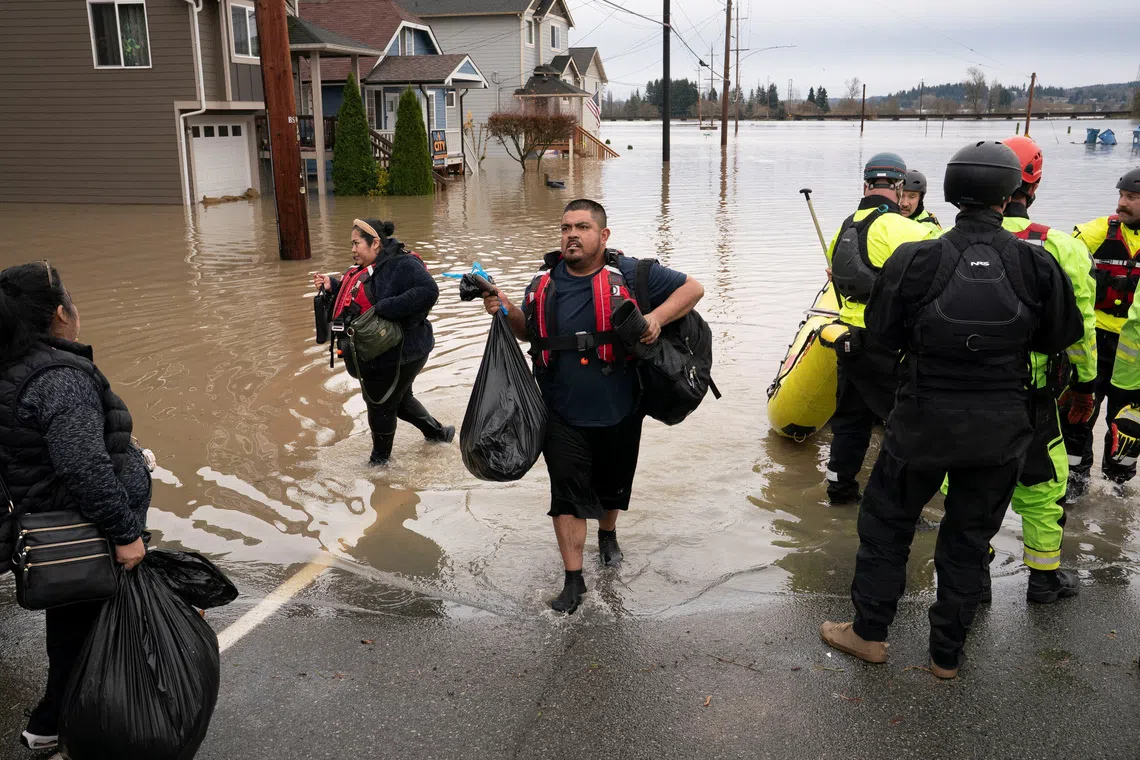
The Pacific Northwest and Canada's British Columbia are grappling with severe, widespread flooding following days of torrential rainfall from a powerful "atmospheric river" system. The deluge, which began earlier this week and intensified by December 11, 2025, has led to mass evacuations, extensive road closures, and significant disruption across the region.
Atmospheric River Unleashes Chaos
Meteorologists describe the responsible storm system as an "atmospheric river"—a vast, airborne current of dense moisture funneling inland from the Pacific Ocean. This phenomenon has saturated the ground, causing rivers to swell and overflow their banks. Western Washington state has been particularly hard-hit, with flood watches issued for the Cascade and Olympic mountains, Puget Sound, and northern Oregon, an area home to approximately 5.8 million people. Neighboring western Montana and northern Idaho have also experienced heavy showers and flooding.
Tens of Thousands Evacuated
The scale of the crisis is immense. Around 100,000 residents in western Washington were placed under "Level 3" evacuation orders, signaling an immediate need to move to higher ground. The majority of these urgent advisories were in rural Skagit County, situated north of Seattle. Ms. Karina Shagren, spokesperson for the state's emergency management division, reported that approximately 3,800 evacuees require temporary shelter.
Despite the widespread evacuations and deployment of swift-water rescue teams, thankfully, there have been no reports of casualties or missing persons as of yet.
Rivers Crest at Record Levels, Infrastructure Under Strain
The Snohomish, Skagit, and Puyallup rivers have seen the worst of the flooding, causing numerous road closures. Over 30 highways and dozens of smaller roads are impassable. The BNSF Railway, a critical freight link for the Pacific Northwest, has also suffered closures and washouts due to rainfall exceeding 25.4 cm to 43.2 cm in many areas.
Officials are bracing for the Skagit River to crest at an alarming two feet above record levels near Mount Vernon and Burlington in Skagit County. This could test flood-control levees and dikes, some of which were repaired after the last major flood in 2021. Robert Ezelle, director of the state's emergency management division, cautioned that the situation remains "unpredictable" and "dangerous." Washington Governor Bob Ferguson has declared a statewide emergency to expedite federal disaster aid.
British Columbia Faces Parallel Crisis
Just north of the border, British Columbia is facing a similar crisis. Five of the six major Canadian highways leading to Vancouver, the country's largest port, were shut down due to flooding, rockslides, and avalanche risks. This severely impacts access to Vancouver, which relies on a limited network vulnerable to extreme weather. The province's Transport Ministry described the situation as "evolving and very dynamic."
This event echoes a late 2021 atmospheric river that caused catastrophic floods and mudslides in southern British Columbia, resulting in four deaths and over C$500 million in damages.
Lingering Threat and Climate Change Concerns
While the immediate storm system was expected to subside, lingering rains continue to pose a flood threat to the already saturated region. Meteorologists warn that while such storms are not uncommon on the US Pacific Coast, their frequency and intensity are projected to increase over the next century if human-induced climate change continues unabated. This highlights a growing concern about the long-term impact of planetary warming on weather patterns in the region.