Audrey Crews: Paralyzed Woman Writes Name After 20 Years Using Neuralink Brain Chip
Jul 30, 2025
 United States
Technology
United States
Technology
United States
Technology
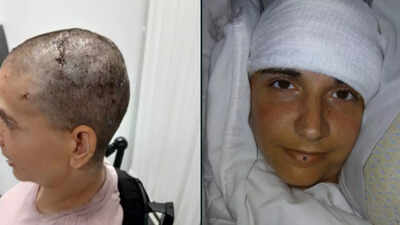
Audrey Crews, paralyzed for 20 years, writes her name using Neuralink's brain chip, marking a milestone in thought-based computer control and offering hope.
Audrey Crews Writes Name After 20 Years Using Neuralink Brain Chip
In a remarkable achievement, Audrey Crews, paralyzed for two decades, has become the first Neuralink patient to publicly demonstrate thought-based computer control. With the aid of Elon Musk’s Neuralink brain chip, she successfully wrote her name on a computer screen using only her thoughts.
A Milestone for Paralysis Treatment
This breakthrough offers a glimpse into a future where individuals with paralysis may regain independence. Audrey's achievement symbolizes hope for millions living with paralysis.
Who is Audrey Crews?
Audrey Crews, known as “Patient P9” in Neuralink’s clinical trial, suffered complete paralysis for 20 years due to a severe spinal cord injury. After a brain chip implant at the University of Miami Health Centre, she shared an image of her digitally signed name on X (formerly Twitter), stating, “I tried writing my name for the first time in 20 years.”
Neuralink's Goals
Founded by Elon Musk in 2016, Neuralink aims to develop brain-computer interfaces (BCIs) for various applications:
- Telepathy: Enabling control of computers and devices through neural signals.
- Blindsight: Restoring vision by stimulating the brain’s visual cortex.
- Deep: Managing conditions like Parkinson’s disease and epilepsy.
How the Neuralink Chip Works
The Neuralink chip uses ultra-thin electrode threads implanted in the brain. These electrodes collect electrical activity, which is decoded by AI algorithms and transmitted wirelessly to a computer.
The Future of Neuralink
Neuralink is in its early clinical trial phase, focusing on safety and accuracy. The company plans to expand to more patients and explore applications beyond paralysis. Elon Musk envisions brain-computer interfaces becoming as common as LASIK surgery.
By news
4 months ago