Supreme Court Confronts Trump's Birthright Citizenship Challenge
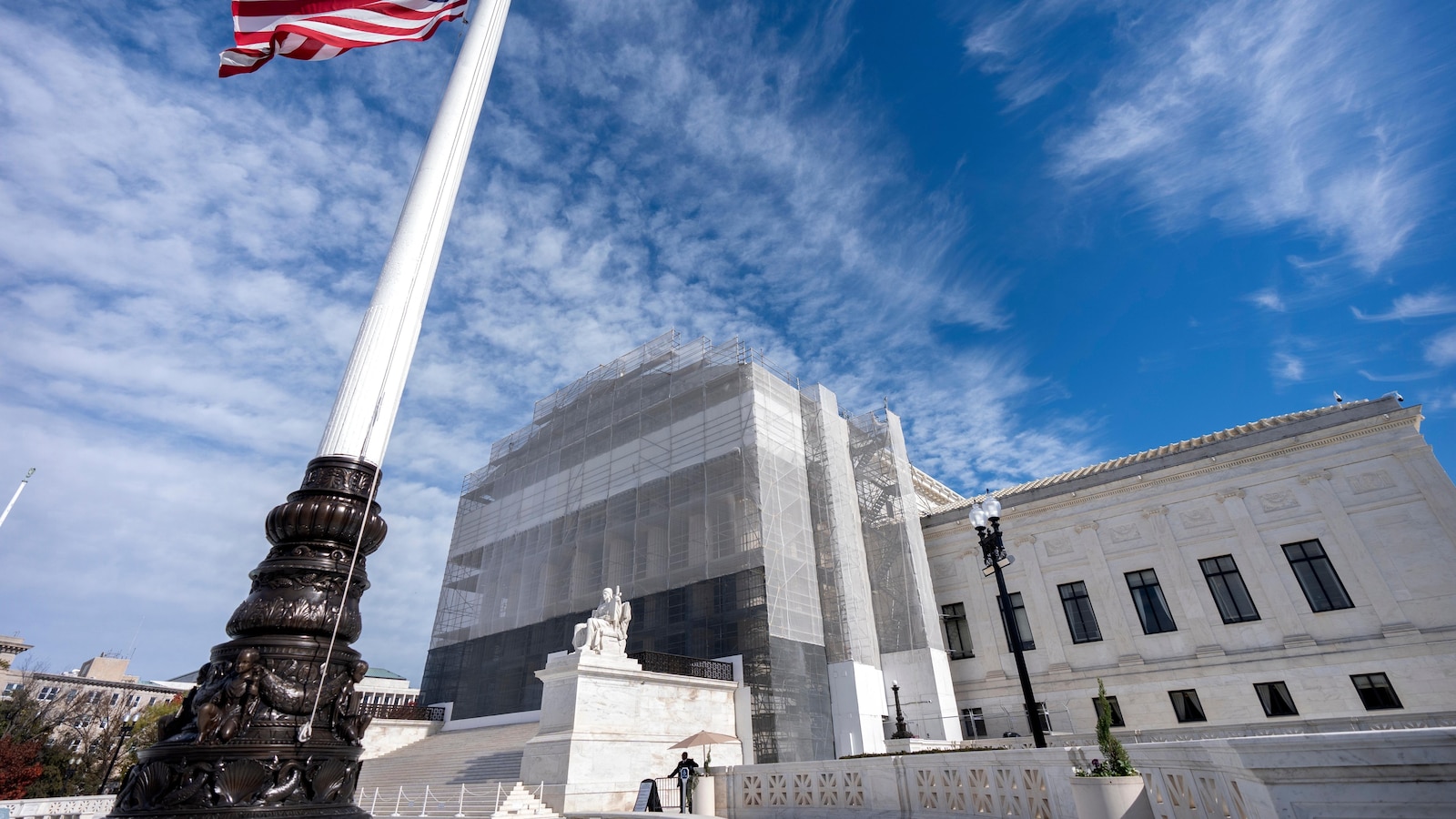
The nation's highest judicial body, the Supreme Court, is currently engaged in private deliberations over a contentious issue that could redefine American citizenship: former President Donald Trump’s executive order on birthright citizenship. This order posits that children born in the United States to parents residing illegally or temporarily within its borders are not automatically granted American citizenship. The justices are poised to announce as early as Monday whether they will take up Trump’s appeal, aiming to overturn a series of lower court decisions that have uniformly blocked the implementation of these citizenship restrictions.
A Pillar of the 14th Amendment Under Scrutiny
At the heart of this legal battle is the interpretation of the 14th Amendment of the U.S. Constitution. For over 125 years, the consensus has been that this amendment, particularly its first sentence, confers citizenship upon nearly everyone born on American soil, with limited exceptions such as children of foreign diplomats. Trump's order, signed on the first day of his second term, directly challenges this long-standing understanding, asserting that children of non-citizens are not “subject to the jurisdiction” of the United States and therefore not entitled to automatic citizenship. Legal experts and lower courts, however, have largely concluded that the order violates, or most likely violates, the 14th Amendment, which was originally enacted to secure citizenship for formerly enslaved Black people.
Lower Courts Unanimously Reject Executive Order
Multiple lower courts have consistently ruled Trump's executive order unconstitutional or likely to be so. This stance has been maintained even after a late June Supreme Court ruling that limited judges’ use of nationwide injunctions. While the Supreme Court's previous decision did not directly address the constitutionality of the birthright citizenship order, it left room for other court orders with nationwide effects, such as those arising from class-action lawsuits or state-led challenges. For instance, the 9th Circuit Court of Appeals in San Francisco affirmed the necessity of a nationwide injunction in a lawsuit brought by a group of states, preventing potential chaos if the policy were unevenly applied across the country. Similarly, a federal judge in New Hampshire issued a block on the order in a class-action suit encompassing all affected children.
Broader Immigration Crackdown Context
This birthright citizenship initiative forms a crucial part of the Trump administration's broader immigration enforcement strategy. Other significant actions during his tenure included intensified immigration sweeps in various cities and the unprecedented peacetime invocation of the 18th-century Alien Enemies Act. The administration has faced numerous legal battles stemming from these policies. The Supreme Court itself has delivered mixed signals through its emergency orders: halting the use of the Alien Enemies Act to fast-track deportations of alleged Venezuelan gang members without hearings, yet permitting the resumption of broad immigration stops in the Los Angeles area, even after a lower court had challenged stops based solely on race, language, job, or location. Additionally, the justices are reviewing the administration's request to deploy National Guard troops for immigration enforcement in the Chicago area, a move indefinitely blocked by a lower court.
The Path Forward: Arguments and Expectations
This birthright citizenship case marks the first Trump immigration policy to potentially reach the Supreme Court for a definitive final ruling. The administration, through Solicitor General D. John Sauer, has vigorously argued for the high court's review, contending that lower court decisions “invalidated a policy of prime importance to the president and his administration in a manner that undermines our border security.” Sauer asserted these decisions “confer, without lawful justification, the privilege of American citizenship on hundreds of thousands of unqualified people.”
Conversely, the American Civil Liberties Union (ACLU), representing plaintiffs in the New Hampshire case, has urged the court to dismiss the appeal due to the “flimsy” nature of the administration's arguments. However, ACLU lawyer Cody Wofsy affirmed their readiness to challenge Trump's stance should the court decide to hear the case, expressing confidence in a win. If the Supreme Court accepts the appeal, arguments would likely be heard in the spring, with a final, landmark ruling anticipated by early summer.