FBI Probes Afghan Immigrant's Ambush Shooting of National Guard Near White House; Immigration Policy Under Scrutiny
Nov 27, 2025
 United States
National Security
United States
National Security
United States
National Security
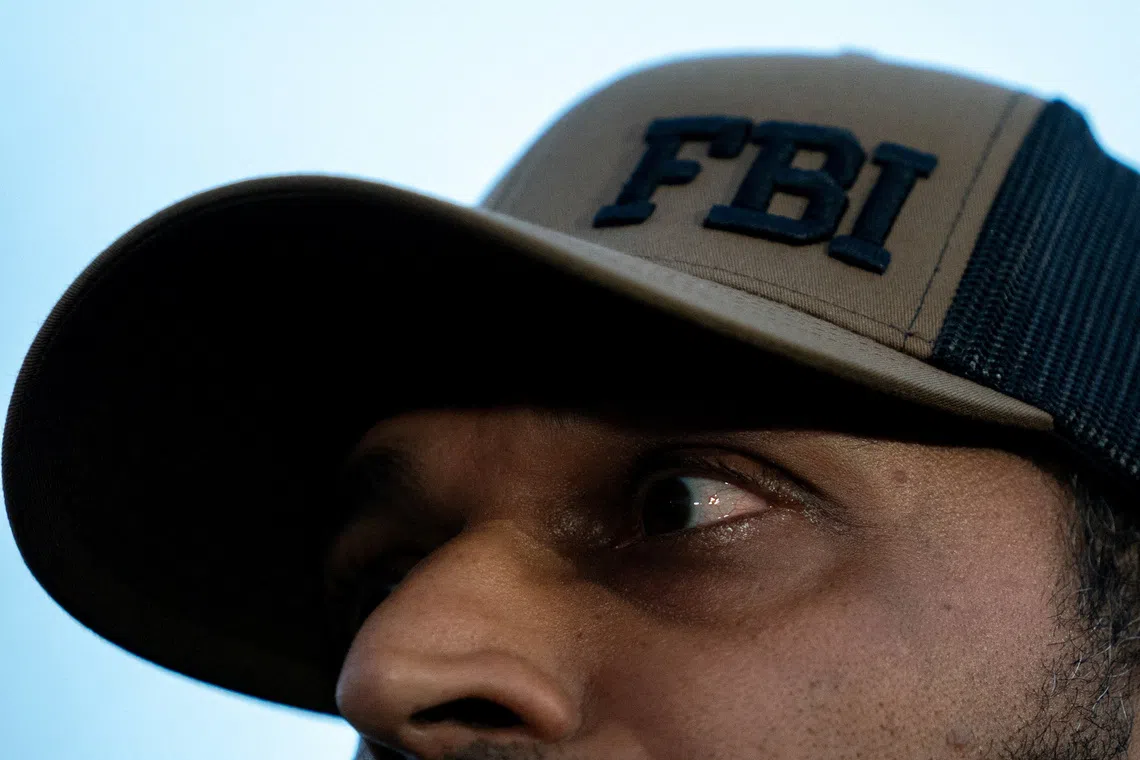
The FBI investigates an Afghan immigrant's ambush shooting of two National Guard soldiers near the White House, sparking a review of immigration policies. Soldi
FBI Probes Ambush Shooting of National Guard Near White House; Immigration Policy Under Scrutiny
WASHINGTON D.C. – A brazen ambush shooting mere blocks from the White House on Thanksgiving eve has sent shockwaves through the nation's capital, prompting a swift FBI-led investigation into the motives of an Afghan immigrant accused of opening fire on two National Guard soldiers. The two guardsmen, part of a controversial militarized law enforcement mission in Washington D.C., remain hospitalized in critical condition following the attack.
Suspect Identified, Immigration Policy Under Scrutiny
The Department of Homeland Security identified the alleged assailant as Rahmanullah Lakanwal, a 29-year-old Afghan national who reportedly resided in Washington state. Lakanwal was wounded in a shootout with other National Guard troops before his arrest.
President Donald Trump, reacting from Florida, condemned the incident as "an act of evil, an act of hatred and an act of terror." In response, his administration announced an immediate re-examination of all Afghans who entered the U.S. during the Biden presidency. Subsequently, the U.S. Citizenship and Immigration Services agency indefinitely halted processing all immigration requests from Afghan nationals, citing a need to review security and vetting protocols.
DHS confirmed Lakanwal arrived in the U.S. in 2021 under Operation Allies Welcome, a Biden-era initiative designed to resettle thousands of Afghans who had assisted U.S. forces and faced threats from the Taliban after the American withdrawal. Although his specific immigration record wasn't fully disclosed, an anonymous Trump administration official stated Lakanwal applied for asylum in December 2024 and received approval on April 23 of the current year, just three months into Trump's term. Crucially, the official noted Lakanwal had no known prior criminal history.
Attack Details and Immediate Aftermath
The midday shooting unfolded outside a busy subway station, a short distance from the presidential mansion. Secret Service agents quickly placed the White House under a security lockdown as a precautionary measure.
Defense Secretary Pete Hegseth revealed President Trump requested an additional 500 National Guard troops for the capital, augmenting the existing force of over 2,000 soldiers. Vice President JD Vance, commenting on the incident while in Kentucky, leveraged the shooting to underscore the Trump administration's strict immigration stance, declaring, "We must redouble our efforts to deport people with no right to be in our country." This statement immediately drew criticism from those who argue the administration's immigration tactics are excessively harsh and often indiscriminately target individuals, including those with no criminal records or legal status.
Washington Mayor Muriel Bowser, who has frequently clashed with President Trump over the National Guard's deployment, described the incident as a "targeted shooting." Metropolitan Police Department's Executive Assistant Chief Jeff Carroll elaborated, confirming the two West Virginia National Guard members were on a "high-visibility patrol" when the suspect "came around the corner," drew a weapon, and fired immediately. Other Guard members engaged the suspect in a gunfight and subdued him.
Broader Context: National Guard Deployment Controversy
This shooting reignites the debate surrounding President Trump's extensive use of National Guard troops in Democratic-led cities. Trump initially ordered the DC deployment months ago to combat what he termed an unsafe city, despite legal challenges from District of Columbia officials who viewed it as an infringement on local governance. Just five days prior to the shooting, a federal judge issued a temporary injunction preventing National Guard troops from performing law enforcement duties in D.C. without the mayor's consent, though this order's effect was paused until December to allow for an administration appeal.
Beyond Washington, Trump has deployed Guard troops to Los Angeles, Chicago, Portland, Oregon, and Memphis, Tennessee, citing "lawlessness" and "violent unrest" linked to his immigration crackdowns. Critics, however, contend these deployments are politically motivated shows of force designed to punish political adversaries. The Thanksgiving eve ambush adds another complex layer to these ongoing national discussions on security, immigration, and federal-local authority.
By news
7 months ago