
Hong Kong Rises: Community, Corporations, and Government Unite After Deadly Tai Po Fire
Hong Kong has witnessed an extraordinary outpouring of community spirit in the wake of its deadliest blaze in nearly 80 years. Following a devastating fire that engulfed the Wang Fuk Court housing complex in Tai Po, claiming at least 94 lives and leaving scores missing, hundreds of volunteers, along with robust support from corporations and the government, have mobilized to provide urgent aid to the victims.
Grassroots Response: Volunteers Lead the Charge
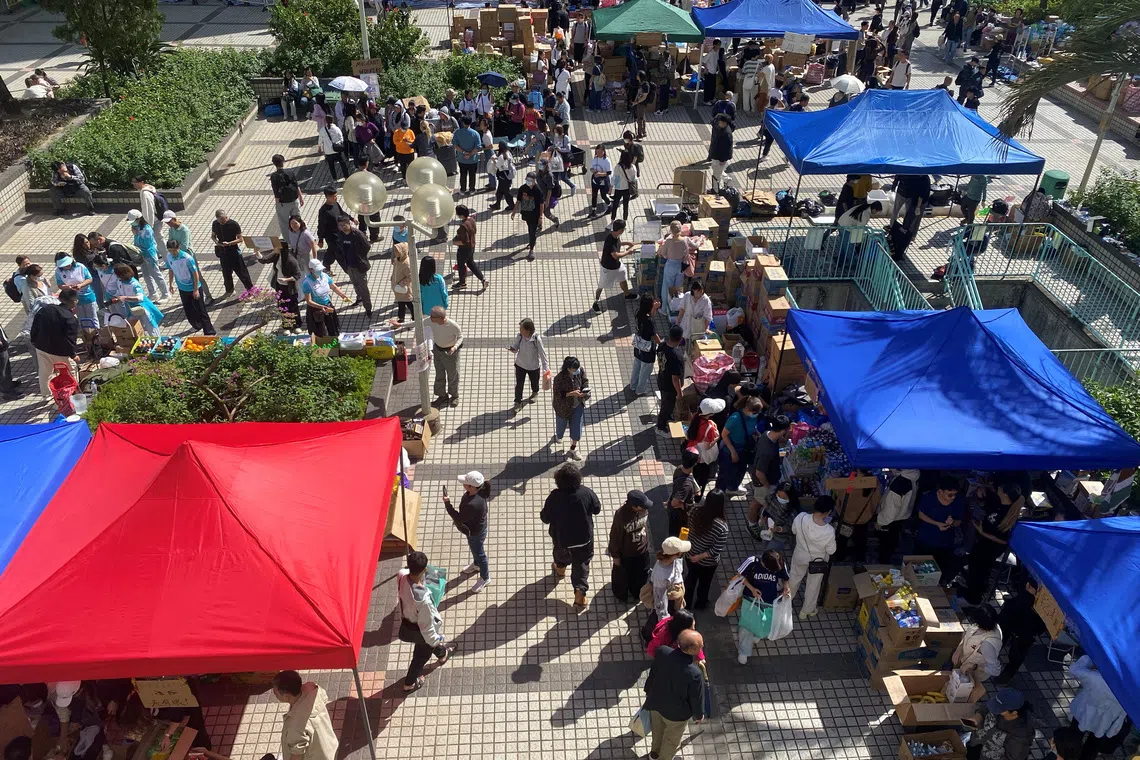
The inferno, which struck the northern district, triggered an immediate and widespread civilian response. Volunteers rapidly formed teams, transforming areas near the damaged complex, including a space beside a shopping mall, into bustling support camps. Under blue and red marquees, essential supplies ranging from diapers and hot meals to toiletries, bedding, clothing, and even pet provisions are being sorted and distributed day and night. Helena, a 22-year-old coordinating volunteer, described the scene as "real civil participation," highlighting the grassroots nature of the relief efforts.
Further demonstrating this remarkable solidarity, a resource collection point was established at the nearby Tai Po train station. Here, items like pillows, socks, and water bottles are gathered before being transported to shelters and a local kindergarten repurposed as an aid hub. Bosco Pang, 40, an employee of electric car company BYD, ingeniously set up a mobile charging station from the back of his car, ensuring power banks for volunteers and displaced residents remained operational. The city’s residents also queued at blood donation centers, eager to assist the severely injured.
Government and Corporate Sector Step Up
Beyond the grassroots movement, significant institutional support has quickly materialized. Hong Kong's leader, John Lee, announced a substantial HK$300-million support fund, promising emergency relief of HK$10,000 to each affected household. China’s Hong Kong and Macao Affairs Office collaborated with Guangdong province to expedite rescue equipment and medical supplies.
The corporate sector has also stepped forward with considerable donations. Prominent property tycoons Li Ka Shing and Lee Shau Kee, alongside property giants like Hang Lung and Shangri-la Group, have pledged support. Chinese logistics firm SF Express committed its 146 stores to collect and transport emergency resources like shampoo, tissues, and medical supplies free of charge. Automotive leaders Xiaomi, Xpeng, and Geely, as well as the charitable foundations of Alibaba's Jack Ma and Tencent, have announced contributions. Even international figures like Chilean businessman Jean Salata, through his family office Central Cove, offered a HK$10 million donation specifically for trauma counseling, education assistance for children, and financial relief. Hong Kong Airlines joined the relief effort with a HK$10 million pledge, offering logistical support and arranging flights for vital supplies.
A City United in Resilience
The collective sentiment was perhaps best encapsulated by Jason Lau, a 25-year-old volunteer, who stated, "Hong Kong people must be united. I felt I had to help out... as many people as I can." This spirit of unity and rapid, multifaceted response underscores Hong Kong's resilience in the face of tragedy.