
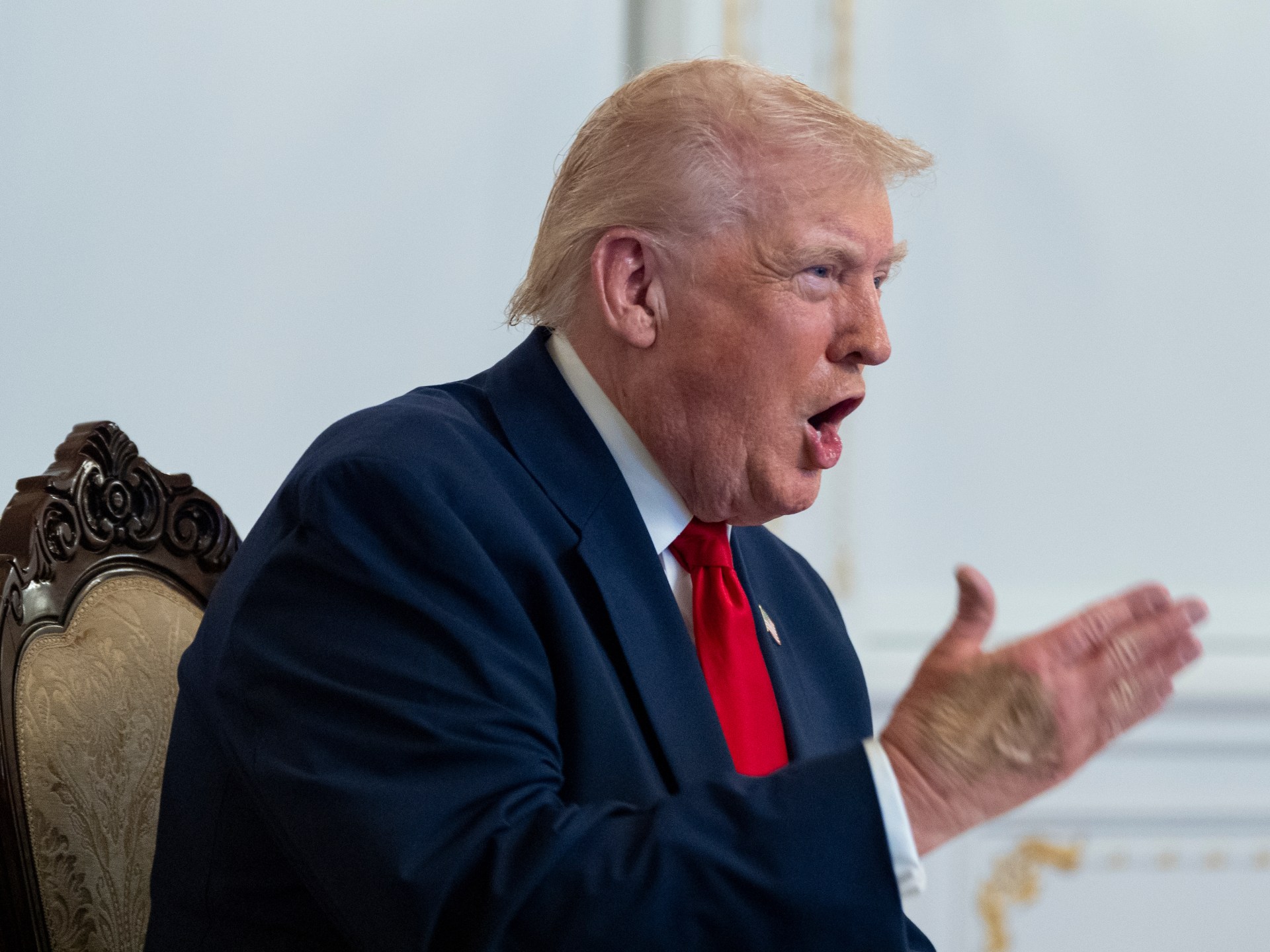
Trump Announces Sweeping Immigration Halt and Green Card Review
President Donald Trump has outlined a dramatic overhaul of U.S. immigration policy, declaring his intent to impose a permanent suspension on migration from all “Third World countries.” This significant announcement, made public via his Truth Social platform from his Mar-a-Lago estate in Palm Beach, Florida, closely follows the naming of an Afghan national as a suspect in a shooting incident involving two National Guard members in Washington, D.C.
Trump's latest declarations signal an intensified focus on restricting immigration, expanding upon previous directives. Earlier, he had instructed the U.S. government to conduct a comprehensive re-examination of all green card applications originating from 19 “countries of concern.” While the term “Third World” was not explicitly defined by Trump, it commonly refers to developing nations predominantly located in the Global South.
Key Policy Directives from Trump's Statement
In his online post, the former President detailed several stringent measures he plans to implement:
- A “permanent pause” on migration from “all Third World Countries,” aiming to allow the U.S. system to “fully recover” and to “terminate all of the millions of Biden illegal admissions.”
- The immediate removal of any individual identified as “not a net asset to the United States” or deemed “incapable of loving our Country.”
- An explicit end to all federal benefits and subsidies currently provided to “noncitizens.”
- The denaturalization of migrants found to “undermine domestic tranquillity” and the deportation of any foreign national classified as a “public charge, security risk, or non-compatible with Western civilization.”
USCIS Confirms Rigorous Review
Joseph Edlow, the Director of U.S. Citizenship and Immigration Services (USCIS), corroborated that he had received direct instructions from President Trump to undertake a “full-scale, rigorous re-examination” of every green card application from every “country of concern.” Edlow underscored the paramount importance of national security, asserting that the American people should not bear the financial burden of the prior administration’s “reckless resettlement policies.”
Although Edlow initially refrained from naming the specific nations, his office later referred to a presidential proclamation from June 4 that restricts entry for citizens from 19 countries. This list includes nations such as Afghanistan, Haiti, Iran, Myanmar, Venezuela, and Yemen. It's also worth noting that USCIS had previously announced an indefinite suspension of all Afghan immigration requests, pending further security and vetting reviews.
The DC Shooting Incident and its Implications
The immediate trigger for these heightened immigration restrictions appears to be the recent shooting incident in Washington, D.C. Jeanine Pirro, U.S. attorney for the District of Columbia, identified the suspect as Rahmanaullah Lakanwal, a 29-year-old Afghan national. According to Pirro, Lakanwal entered the U.S. under the “Operation Allies Welcome” program following the U.S. withdrawal from Afghanistan in 2021. Federal authorities, including the FBI, are now actively reviewing his immigration history and the vetting process he underwent.
Continued Trend of Immigration Restrictions
This is not an isolated incident within the Trump administration's approach to immigration. In October, the administration set the refugee admission ceiling for 2026 at a historically low figure of 7,500 – the lowest level recorded since 1980. Furthermore, an internal memo signed by Edlow, and obtained by The Associated Press, reveals that a significant review is currently underway for approximately 200,000 refugees admitted to the U.S. during the administration of President Joe Biden. This review also entails the suspension of green card applications for refugees who arrived in the U.S. during that specific period.
These proposed policies collectively signify a substantial recalibration of U.S. immigration enforcement and its underlying philosophy, with considerable ramifications for both prospective migrants and current noncitizens within the United States.