Spain Halts Pork Exports to China After African Swine Flu Outbreak Near Barcelona | Economic Impact & EU Concerns
Nov 29, 2025
 Spain
Agriculture & Food Safety
Spain
Agriculture & Food Safety
Spain
Agriculture & Food Safety
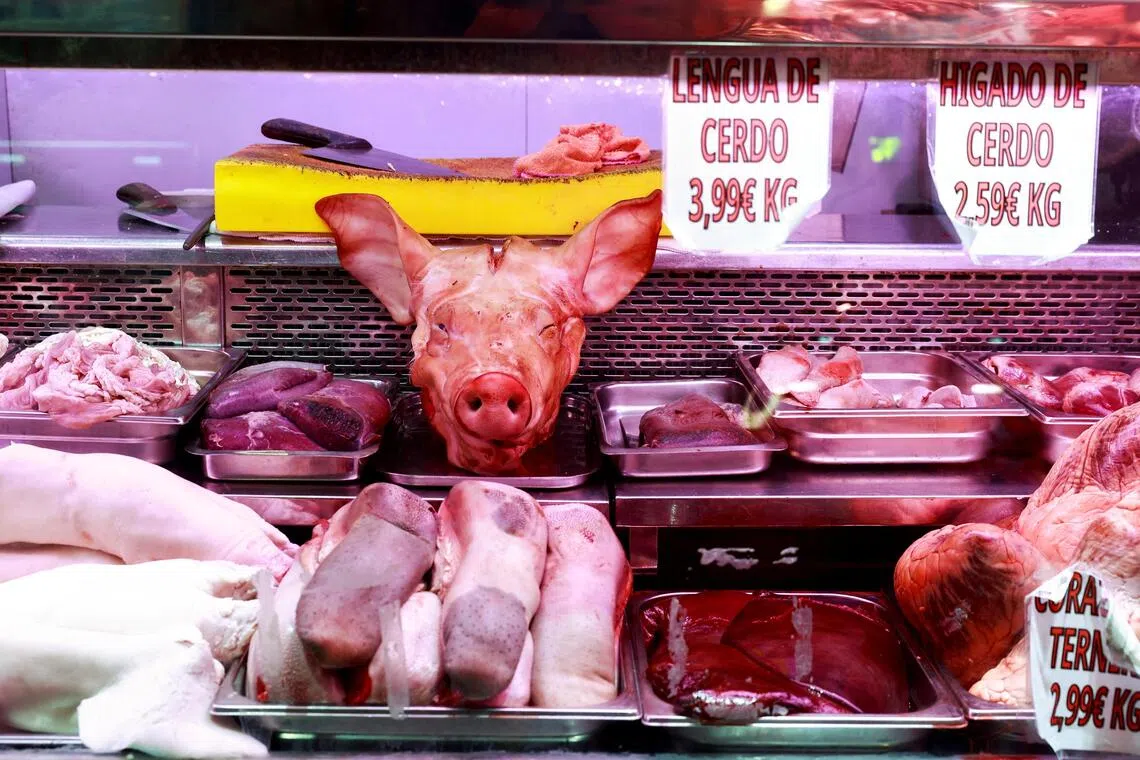
Spain has halted pork exports to China after African swine flu was detected in wild boar near Barcelona, marking the first outbreak since 1994. This impacts Spa
Spain Halts Pork Exports to China After African Swine Flu Detection Near Barcelona
Spain, the European Union's top pork producer, has temporarily paused all pork exports to China following the recent detection of African swine fever (ASF) in wild boar near Barcelona. This marks the first outbreak in the country in three decades, since 1994, and emerges at a crucial juncture as Spain has been actively seeking to expand its market share in China.
The Spanish Agriculture Ministry confirmed the suspension after two deceased wild boar tested positive for the highly contagious virus. This measure is in accordance with a recently established bilateral agreement with Beijing, which advocates for a more targeted approach to import restrictions. Under the terms of this protocol, once officially activated by China, unaffected regions of Spain will be permitted to resume pork exports.
Economic Ramifications and Broader EU Concerns
The news delivers a significant blow to Spain's robust pork industry, which accounts for approximately a quarter of the EU's total output, positioning it ahead of Germany. Annual pork exports from Spain are valued at around €3.5 billion (S$5 billion). This outbreak casts a considerable shadow on Spain's strategic efforts to cultivate Chinese markets, particularly following China's recent imposition of tariffs on EU pork amidst an anti-dumping investigation.
Meat analyst Jean-Paul Simier of Cyclope, a French commodities research group, voiced considerable concern, stating, "It’s not good news. The European market is already struggling after a 20 per cent drop in prices since July." He further cautioned about the potential for an embargo against the EU’s largest pork exporter, especially from key Asian markets like China.
Targeted Restrictions and Industry Preparedness
The Spanish pork lobby, Interporc, has clarified that only farms situated within a 20-kilometer radius of the outbreak site – a wooded area near Barcelona where five pig farms operate – will face restrictions on their operations and product sales. This localized approach is a direct benefit of the new agreement with China. According to Mr. Daniel de Miguel, Interporc's international director, this means the vast majority of Spanish pork producers can continue their exports to China and the EU. However, he also noted that other countries, such as Japan, might still choose to impose broader, blanket bans.
The Catalonia region, where Barcelona is located, represents approximately 7 percent of Spain's total pork farms. The Agriculture Ministry has already formally notified the European Union and has initiated emergency measures within the affected zone, urging pig farms to significantly enhance their biosecurity protocols while investigators diligently work to pinpoint the precise source of the infection.
Wider European Context and Future Outlook
While African swine fever is completely harmless to humans, it is invariably lethal to pigs and has been steadily spreading westward across Europe in recent years. Germany's substantial pork industry has already endured significant disruption due to bans imposed by various overseas countries, and Croatia has been actively grappling with its own outbreaks in recent months.
Spain's farmers' association, Asaja, has affirmed the sector's readiness to confront this challenge. Nevertheless, Asaja also underscored the critical necessity for authorities to address the "out of control presence" of wild animals such as boars and rabbits in rural areas, which present a continuous risk of contaminating livestock. The industry emphasized its extensive investments in modernizing farms, reinforcing biosecurity measures, and implementing advanced operational practices to mitigate such threats.
This evolving situation highlights the delicate balance inherent in international trade, animal health management, and environmental stewardship within a globalized food system. The swift implementation of the bilateral protocol with China demonstrates a strategic and proactive effort to contain economic damage while simultaneously tackling a serious veterinary health crisis.
By news
7 months ago