Trump Bolsters US-Taiwan Relationship Amidst Heightened China Tensions with New Bill
Dec 3, 2025
 United States
International Relations
United States
International Relations
United States
International Relations
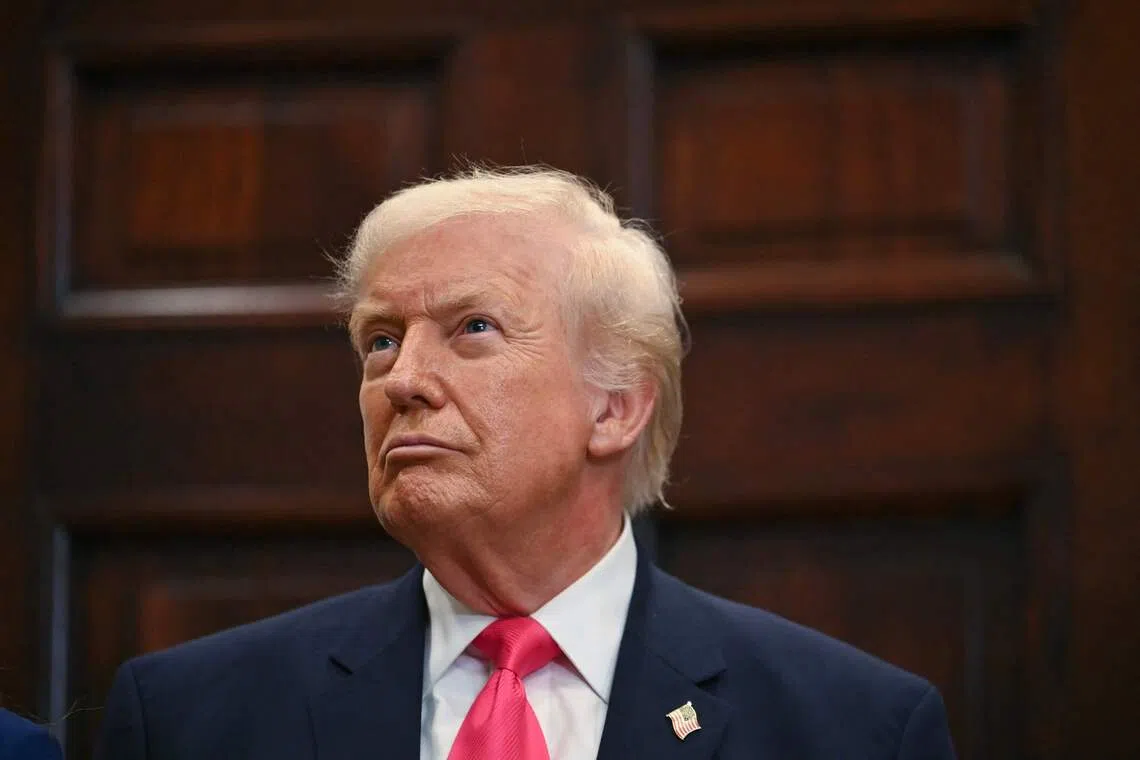
President Trump signed a bill requiring the State Department to deepen US-Taiwan ties and review engagement limits, amidst rising concerns over China's territor
Trump Bolsters US-Taiwan Relationship Amidst Heightened China Tensions
In a significant move underscoring evolving U.S. foreign policy, President Donald Trump officially enacted legislation on December 2, mandating the U.S. State Department to systematically re-evaluate its approach to engagement with Taiwan. This new law comes at a critical juncture, as international anxieties escalate over the possibility of China asserting control over the self-governing island.
Deepening Bilateral Bonds
The newly signed measure stipulates regular reviews by the State Department, specifically requiring assessments at least every five years. The primary objective of these evaluations is to elucidate how the established guidelines can further solidify the bond between the United States and Taiwan. Crucially, the legislation also compels the identification and detailed exploration of opportunities to remove any self-imposed limitations that currently hinder robust US-Taiwan interactions.
Representative Ann Wagner, a Republican from Missouri who spearheaded the bill, articulated the legislation's intent, stating it “sends the message that we stand strong against the Chinese Communist Party’s dangerous efforts to dominate the region.” Her remarks highlight the strategic rationale behind the new law, positioning it as a direct counter-measure to Beijing's perceived expansionist ambitions.
Geopolitical Ramifications
President Trump's endorsement of the bill immediately followed a significant communication between him and Chinese President Xi Jinping, during which Xi reportedly reaffirmed that the unification of Taiwan with mainland China remains a paramount issue for Beijing, which views Taiwan as an integral part of its territory.
Further compounding the intricate regional dynamics are recent comments from Japanese Prime Prime Minister Sanae Takaichi. She suggested that any forceful seizure of Taiwan by China could pose an “existential risk” to Japan. This classification is particularly noteworthy as it could legally pave the way for Japanese military involvement in a potential defensive response to such a scenario. Ms. Takaichi's hypothetical security outlined in parliament, however, provoked considerable indignation from Beijing, underscoring the sensitivity of the issue.
Shifting US Strategy?
Historically, U.S. leaders have maintained a policy of "strategic ambiguity" regarding Taiwan. Under this long-standing doctrine, the United States reserves the prerogative to employ military force but refrains from explicitly stating whether it would intervene if China were to launch an attack on Taiwan. While the new legislation aims to deepen ties, it operates within the broader framework of this evolving, yet strategically ambiguous, posture. The bill signals a concrete step towards strengthening diplomatic and strategic engagement, potentially redefining the nuances of the US commitment to Taiwan's security and autonomy.
By news
8 months ago