Trump Enacts Taiwan Assurance Act: Taipei Thanks US, Beijing Strongly Condemns Amid Rising Tensions
Dec 3, 2025
 Taiwan
International Relations
Taiwan
International Relations
Taiwan
International Relations
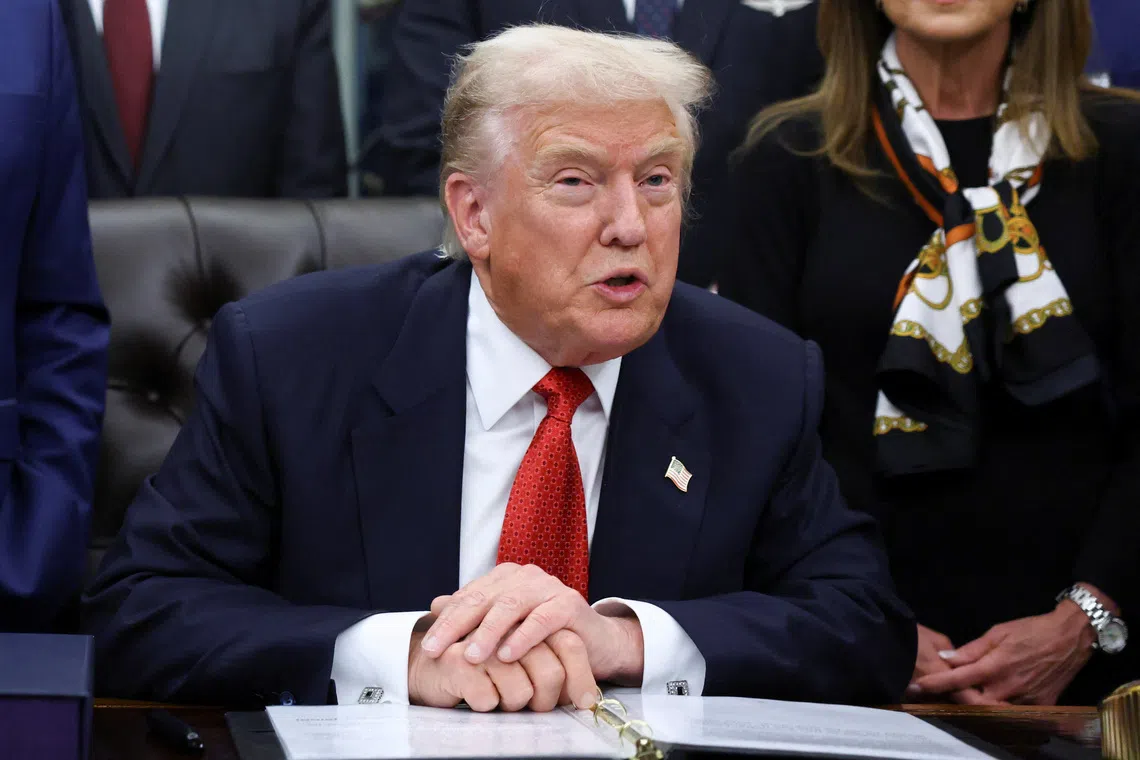
President Trump signed the Taiwan Assurance Implementation Act, requiring regular reviews of US-Taiwan interaction guidelines. Taiwan expressed thanks, while Ch
Trump Enacts Taiwan Assurance Act, Igniting Mixed Reactions from Taipei and Beijing
In a move that has drawn starkly contrasting reactions, U.S. President Donald Trump recently enacted legislation poised to reshape Washington's engagement with Taipei. The signing of the Taiwan Assurance Implementation Act on Tuesday has been met with gratitude from Taiwan and strong condemnation from Beijing, highlighting the enduring sensitivities surrounding the island's status.
Key Provisions of the New Legislation
The new law mandates the U.S. State Department to regularly review and update its official guidelines governing interactions with Taiwan, with evaluations required at least once every five years. This legislative step reinforces the United States' role as Taiwan's principal international supporter, despite the absence of formal diplomatic ties – a situation that has long been a point of contention in the already complex Sino-U.S. relationship. Beijing steadfastly regards Taiwan, a self-governed democracy, as its sovereign territory.
Taiwan's Grateful Response
Taiwan's Presidential Office, through spokesperson Karen Kuo, promptly lauded the act, emphasizing its affirmation of U.S. interaction with Taiwan, its support for closer bilateral relations, and its symbolic strength in upholding shared democratic values, freedom, and human rights. Taiwan's Foreign Minister, Lin Chia-lung, further suggested that more frequent guideline reviews could facilitate Taiwanese officials' access to U.S. federal agencies for meetings, though the legislation itself does not explicitly detail such provisions.
China's Strong Condemnation
Conversely, China's Foreign Ministry spokesperson, Lin Jian, voiced firm opposition to any form of official contact between the United States and what Beijing refers to as "the Taiwan region of China." Jian stressed that "the Taiwan question is the core of China's core interests and the first red line that must not be crossed in China–U.S. relations." He urged the U.S. to handle the Taiwan issue with "utmost prudence," cease all official interactions with Taiwan, and avoid sending any "wrong signals" to what Beijing labels "Taiwan independence' separatist forces."
Historical Context and Future Outlook
This legislative development builds upon previous actions, such as former Secretary of State Mike Pompeo's decision in 2021, under the first Trump administration, to lift restrictions on contacts between U.S. and Taiwanese officials – rules that had been in place since Washington recognized Beijing in 1979.
Taiwan's government consistently rejects China's territorial claims, asserting its inherent right to freely engage with nations worldwide. Meanwhile, President Trump, having met Chinese President Xi Jinping in South Korea in October, is anticipated to visit China in April, adding another layer of geopolitical intrigue to the region's dynamics.
By news
8 months ago
No cameras found for this country.