US Foreign Policy & Drug Trafficking: A Controversial History of Narcotics Involvement & Recent Pardons
Dec 4, 2025
 United States
International Relations
United States
International Relations
United States
International Relations
The US faces scrutiny over drug policy, striking Venezuelan boats while pardoning a convicted Honduran president. This follows a long history of US alleged invo
The United States is currently engaged in a perplexing and controversial drug enforcement strategy, marked by seemingly contradictory actions. While ramping up military strikes against Venezuelan boats for alleged drug trafficking in the Caribbean and eastern Pacific, leading to numerous casualties, the Trump administration recently pardoned Juan Orlando Hernandez, the former president of Honduras. Hernandez, who had been serving a 45-year sentence in the US for severe weapons and drug trafficking offenses, was released on November 28, with Trump claiming he was "treated very harshly and unfairly."
These recent events have fueled skepticism regarding the true motivations behind US anti-drug operations, particularly concerning Venezuela. The Trump administration asserts that Venezuelan vessels are trafficking drugs to the US but has yet to provide concrete evidence. In contrast, data from the United Nations Office on Drugs and Crime (UNODC) for 2023 indicates that the vast majority of cocaine originates from Colombia, Peru, and Bolivia. Furthermore, most US-bound cocaine routes primarily traverse Colombia, Peru, and Ecuador, with Venezuela serving only as a minor transit corridor. The US Drug Enforcement Administration (DEA) corroborated this last year, reporting that 84 percent of seized cocaine in the US came from Colombia, notably omitting Venezuela as a significant source. Critics suggest that the intensified pressure on Venezuela and the pardon of Hernandez might be driven more by a desire to destabilize the left-wing government of President Nicolas Maduro, whom the US accuses of cartel ties, rather than a genuine effort to combat drug trafficking.
This contemporary paradox unfolds against a backdrop of nearly two centuries of alleged US involvement, or complicity, in global drug trafficking, often in pursuit of its foreign policy objectives.
Historical Allegations: Two Centuries of US Involvement
The historical record suggests a complex relationship between US foreign policy and the global narcotics trade:
The Opium Wars (19th Century)
Ironically, while the US now pressures China over fentanyl, American traders 200 years ago were instrumental in pushing opium into China. Alongside British merchants, US traders sought to rectify a trade imbalance caused by high Western demand for Chinese goods. Despite the 1844 Treaty of Wanghia ostensibly outlawing the opium trade, it inadvertently opened ports, allowing US traders to expand their illicit sales. The Second Opium War further solidified the legality of opium trade, a key British demand.
Southeast Asia: Laos During the Vietnam War (1960s-1970s)
During the "Secret War" in Laos, the CIA allegedly ran covert operations to counter communist forces. To support Hmong militias fighting North Vietnamese and Laotian communists, historian Alfred W McCoy claims the CIA-linked airline Air America transported opium from remote areas. The proceeds from these sales, both regional and international, purportedly funded these proxy forces. While the CIA has never formally admitted direct involvement, McCoy's 1972 congressional testimony brought these allegations to light.
The Soviet-Afghan War (1980s)
In Afghanistan, during the Soviet occupation, CIA-backed Mujahideen fighters are alleged by historians like McCoy to have financed their resistance largely through opium cultivation and trafficking. This era saw a dramatic increase in global heroin supply, with Afghanistan becoming a dominant producer by 1999. Trafficking routes extended through Pakistan and Iran, feeding European and Middle Eastern markets. A 1986 CIA report even noted widespread drug use among Soviet troops, who reportedly smuggled drugs back to the Soviet Union.
Post-Afghan War Spillover: Pakistan (1980s)
Following the Soviet invasion, the CIA's partnership with Pakistan's Inter-Services Intelligence (ISI) for Operation Cyclone further exacerbated heroin production in the Golden Crescent (Afghanistan, Pakistan, Iran). Pakistan's tribal regions became crucial transit points for heroin destined for Western markets.
The Iran-Contra Affair (1980s)
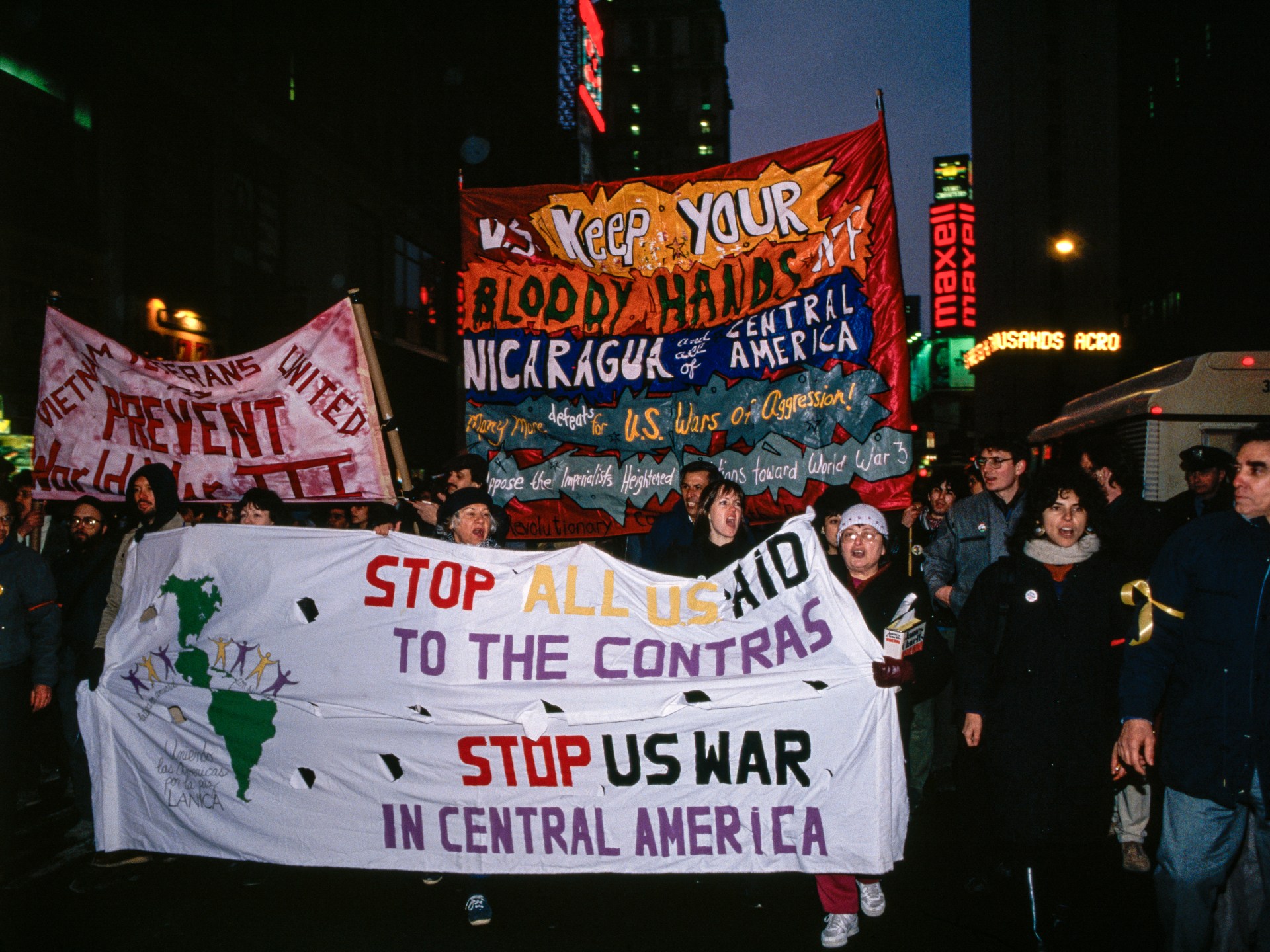
One of the most infamous episodes, the Iran-Contra affair, saw the US secretly selling arms to Iran in exchange for hostage releases, circumventing an arms embargo. Profits from these sales were then illegally diverted to fund the Contras, a right-wing group fighting Nicaragua's left-wing Sandinista government, despite a congressional ban (Boland Amendment) on such funding. Investigative journalist Gary Webb's 1998 book, Dark Alliance, linked Contra-affiliated groups to cocaine smuggling into the US, particularly Los Angeles, where it fueled the crack cocaine epidemic. Webb alleged that the CIA was aware of and supported these transactions, using the drug profits to sustain the Contras.
This extensive historical pattern raises profound questions about consistency and ethics in US foreign policy and its approach to global drug control.
By news
9 months ago