
Trump Vows Personal Involvement in Sudan Peace Amid Escalating Civil War
The devastating civil war in Sudan, now deep into its third year, has prompted United States President Donald Trump to take a personal and direct interest in brokering a peace deal. Secretary of State Marco Rubio affirmed Trump's hands-on oversight of these critical efforts, stating during a cabinet meeting at the White House that the President is "the only leader in the world capable of resolving the Sudan crisis."
International Efforts and Trump's Mandate
Last month, President Trump had already announced plans to collaborate with members of the Quad — a key group comprising the United Arab Emirates, Saudi Arabia, and Egypt — alongside other regional partners to end the brutal 30-month conflict. Speaking at a conference in the US, Trump revealed that Saudi Crown Prince Mohammed bin Salman had specifically requested his intervention to bring an end to the war.
Describing Sudan as "one of the most violent places" in the world and the epicenter of the planet's largest humanitarian crisis, Trump highlighted that international leaders had called on him to intervene and leverage his unique influence to stop the escalating violence.
Conflict Deepens: SAF vs. RSF
The civil war in Sudan erupted in April 2023, with the government-controlled Sudanese Armed Forces (SAF) clashing fiercely with the paramilitary Rapid Support Forces (RSF). The struggle for control has engulfed crucial areas, including the capital Khartoum, and recent RSF advances have severely complicated all attempts at peace negotiations.
Earlier this week, the RSF claimed to have seized control of Babnusa, a strategic city in the vast central Sudanese region of West Kordofan. This city serves as a vital gateway to the western Darfur region, over which the RSF reportedly took full control last month, and indeed, the whole of western Sudan. While the SAF has disputed the Babnusa claim, this reported advance builds on the paramilitary group’s momentum after its capture of el-Fasher, the army’s final holdout in Darfur, following an extensive 18-month siege. The RSF have been accused of committing widespread atrocities in el-Fasher during this period.
Ceasefire Breakdown and Allegations
The latest surge in fighting also appears to breach a unilateral ceasefire that was announced by the RSF following mediation efforts from the Quad. The SAF, which rejected the ceasefire terms presented by the Quad as too favorable to its adversary, has accused the RSF of continuing attacks despite its declared truce. Furthermore, the SAF has publicly stated its belief that the UAE’s involvement in the Quad is biased and that the proposed terms aimed to eliminate the Sudanese army. The UAE has faced widespread accusations of supporting the RSF with money and weapons, but it has staunchly rejected any involvement.
Mounting Humanitarian Catastrophe and Atrocity Fears
Amidst this intense and relentless fighting, United Nations Human Rights Commissioner Volker Turk expressed grave fears on Thursday of potential new atrocities. The UN human rights council has already mandated one inquiry into alleged atrocities – including systematic mass murder, rape, torture, and forced displacement of non-Arab ethnic groups – after the RSF seized El-Fasher, highlighting the extreme brutality of the conflict.
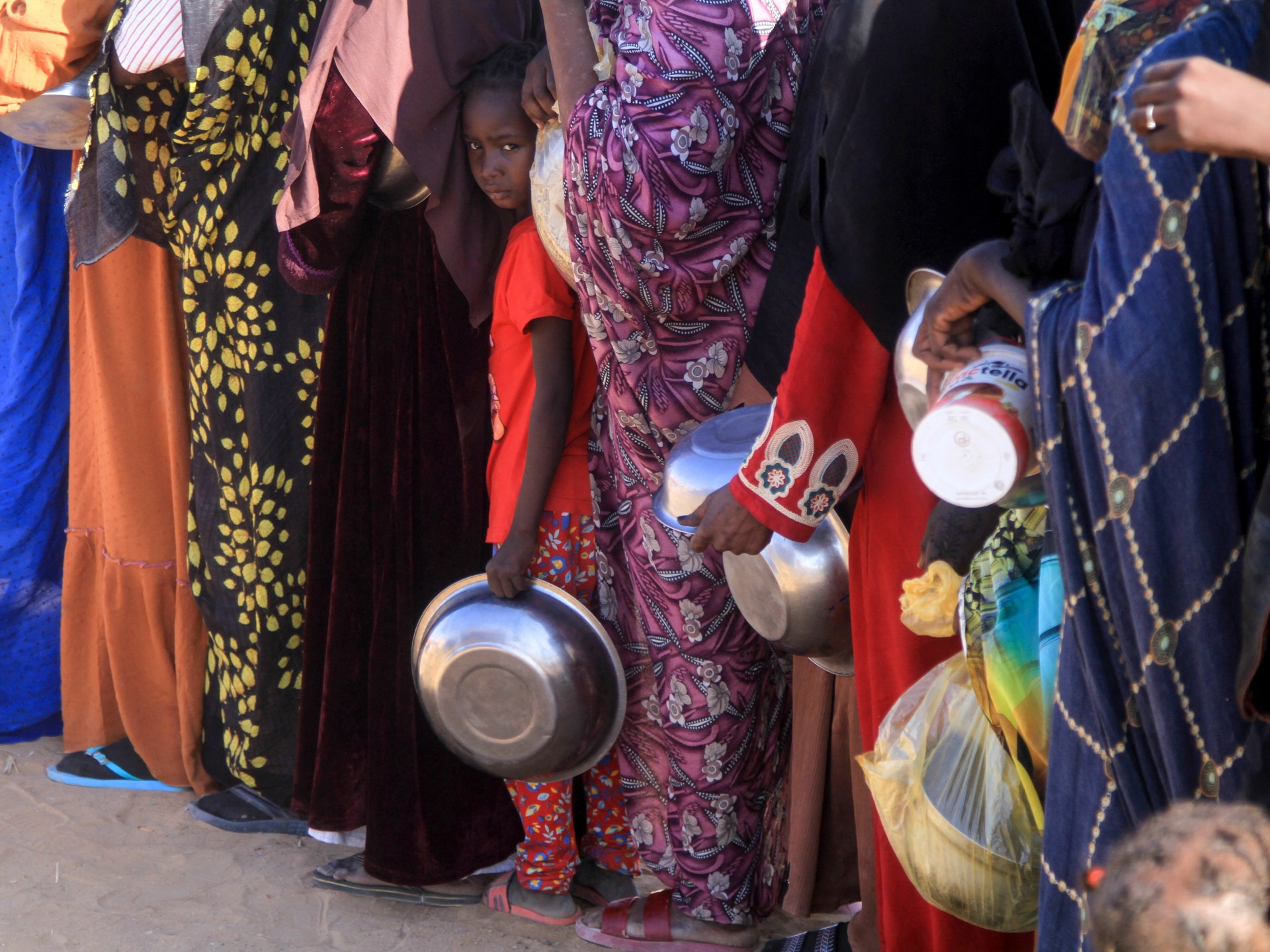
The human cost of Sudan’s war is staggering. According to United Nations figures, more than 40,000 people have been killed, but aid groups contend that this is a significant undercount, and the true number could be many times higher. The UN further reports that the war has created the world’s largest humanitarian crisis, with millions of people forcibly displaced from their homes and large parts of the country pushed to the brink of famine.