Portugal Braces for Historic General Strike Over Sweeping Labor Reforms
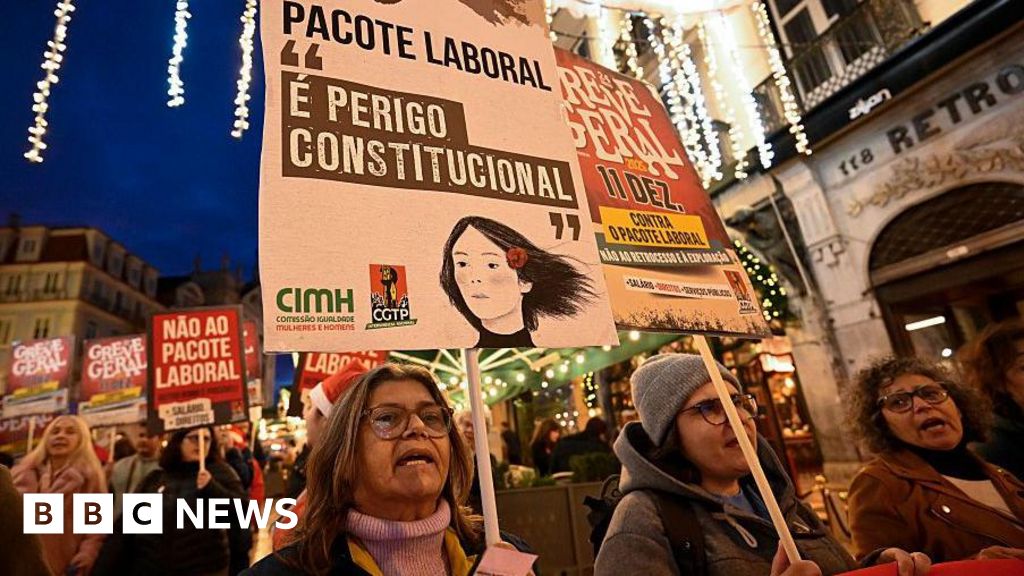
Portugal is on the brink of significant national disruption as its two largest trade union federations orchestrate the country's first general strike in twelve years. This widespread industrial action, scheduled for Thursday, aims to protest the government's unprecedented labor reforms, poised to impact transportation, flights, healthcare, education, and other essential public services.
A Decade-Long Hiatus Ends Amidst Economic Growth
The last time the CGTP and the historically less confrontational UGT united forces was in 2013, during the height of the eurozone debt crisis. At that time, a "troika" of international lenders mandated severe cuts to salaries and pensions as a condition of Portugal's bailout. Fast forward twelve years, and despite Portugal's economy recently becoming the fastest-growing in the eurozone, Prime Minister Luís Montenegro insists on addressing "rigidities" within the labor market. His objective is to enhance corporate profitability, which he argues will lead to better worker salaries.
Prime Minister Misjudges Opposition Strength
Prime Minister Montenegro expressed his commitment to Portugal's ambition of being a European vanguard, yet he appears to have misjudged the intensity of opposition to his minority right-of-centre government's proposals. The dissent is so strong that even a Social Democrat MP, who is also an executive member of the UGT, voted in favor of the strike. While Montenegro did revise some proposals after discussions with the federations last month, these adjustments were evidently insufficient to quell the mounting discontent.
Contentious Proposals Fuel Worker Outrage
Among the more than 100 proposed reforms, several have sparked particular outrage, directly challenging long-standing worker protections:
- Allowing employers to perpetually roll over temporary contracts, undermining job security.
- Reinstating the practice of dismissing workers and then immediately rehiring them indirectly through outsourcing, circumventing fair dismissal rules.
- Eliminating the requirement to reinstate employees who have been unfairly dismissed, eroding safeguards against arbitrary termination.
These proposed changes are expected to disproportionately affect young Portuguese adults in their twenties. Public opinion remains divided. Diogo Brito, an air steward with friends in casual tourism work, supports the strike but believes the reforms are necessary for Portugal to "catch up with richer countries." Conversely, self-employed photographer Eduardo Ferreira, observing many struggling to find secure employment, welcomes the unions' unified stand at this "critical moment." He notes that workers have largely been passive since the troika era until now.
Unions Condemn "Assault on Rights"
Both major union federations have vociferously condemned the reforms. The CGTP views the package as a "frontal assault on the rights of all workers," especially women and young people. The UGT labels it "out of step" given Portugal's current economic growth and stable labor market, reflecting a clear pro-employer bias. The UGT also criticized the formal talks with the government and business as "unbalanced, restrictive, and detrimental."

Political Fallout and Constitutional Concerns
Montenegro's governing coalition, lacking a parliamentary majority, is seeking support for its bill from both the small, free-market Liberal Initiative (IL) and the hard-right Chega party, now the second-largest since May's election. Chega leader André Ventura has expressed some reservations about the impact on family life but seems open to negotiations. This move has drawn criticism from unions and the Socialist party, who accuse Montenegro of abandoning his pre-election pledge to avoid deals with Chega. Critics also warn of a broader right-wing agenda to weaken Portugal's 1976 constitution, which currently provides some of Europe's strongest employment safeguards.
The controversy has also become a significant issue in the lead-up to January's presidential election, with several candidates arguing the labor reform bill violates the 1976 constitution. Portugal's "semi-presidential" system grants the head of state the power to withhold signing bills, sending them to the Constitutional Court or exercising a veto that, while overturnable, can delay the process and force further debate. Such intense scrutiny over the overhaul of the labor code, especially since these plans weren't in the coalition's manifesto, could heighten voter apprehension regarding the government's radicalism.
Widespread Solidarity Beyond Public Sector
Unlike many previous strikes in Portugal, this day of action extends beyond the public sector. For instance, at Autoeuropa, VW's largest factory south of Lisbon, nearly 1,000 employees unanimously voted to join the strike. UGT secretary-general Mário Mourão emphasized the widespread impact, stating, "I believe there is no worker in this country unaffected by the negative measures in this reform. It must be responded to appropriately." The streets of Lisbon are expected to witness thousands protesting the proposed labor laws, underscoring the deep public dissatisfaction.